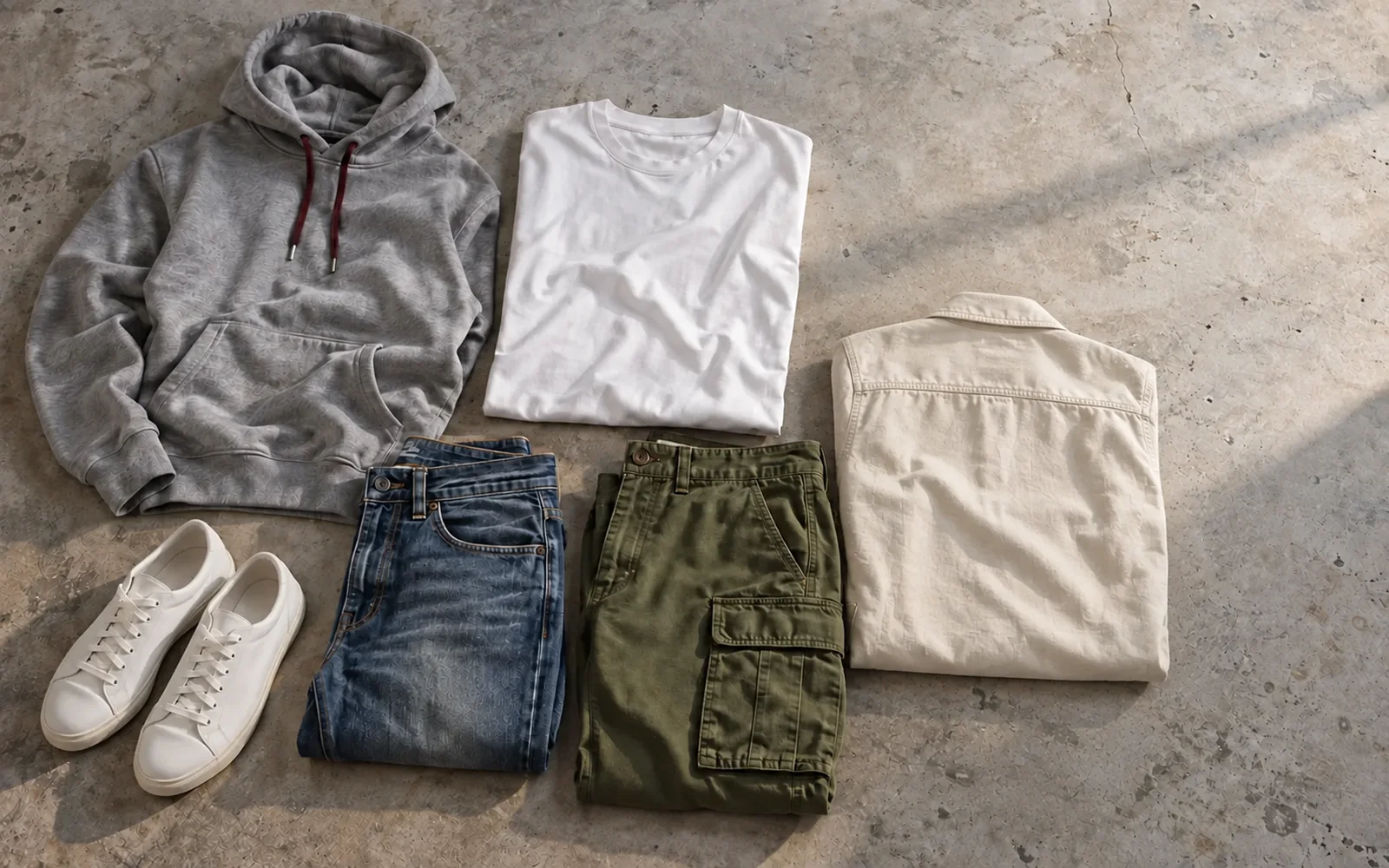
The wrong layer costs you more than the wrong brand: a heavy hoodie at 85°F or a bare tee at 45°F makes the whole day uncomfortable. Choose a streetwear outfit from the day’s temperature band first, plan one removable layer for the gap between morning and afternoon, and only then adjust the silhouette for school, the commute, the weekend or a night out.
Short answer: read the forecast for the hours you will actually be outside, find the matching temperature band below, and start from that band’s base layer. If those hours cross two bands, dress for the coolest stretch and make the outer layer easy to take off and carry for the warmest one. Then check the occasion: school dress codes and workplace norms override any formula. The bands are our editorial guide, not an official scale. For planning a season or a trip, NOAA’s 1991–2020 U.S. Climate Normals give 30-year monthly averages for almost 15,000 U.S. stations, and NOAA says the data help travellers “pack the right clothes”.
This guide is written from a city-street point of view, with Melbourne as a worked example of a place where one day can cover two bands. It does not rank brands or trends; if you want the background on what separates street style from streetwear, read what street style means and how it differs from streetwear.
| Input or item | Typical value or source | Why it matters |
|---|---|---|
| Forecast high and low | Today’s local forecast, °F | Sets the day’s temperature band |
| Hours you will be outside | Your plan plus the hourly forecast for those hours | The band that matters is the one you are outdoors in |
| Gap between high and low | Forecast high minus low | A gap that crosses two bands calls for a removable layer |
| Monthly normal for your city | NOAA U.S. Climate Normals, 1991–2020 | Lets you plan a season or trip before the forecast exists |
| Rain or wind | Forecast precipitation and wind | Decides the outer shell and the shoes |
| Occasion | School, commute, weekend, night out | Sets how relaxed the cut and the footwear can be |
| Where you will carry a layer | Bag, tote or tie-around option | A removable layer only works if you can carry it |
The 3-Step Streetwear Weather Check
The method is three questions asked in order: what band are your outdoor hours in, do those hours cross into a second band, and what does the occasion allow? Answering them in that order stops the most common mistake, which is building a look around one hero piece and then discovering it does not suit the weather or the setting.
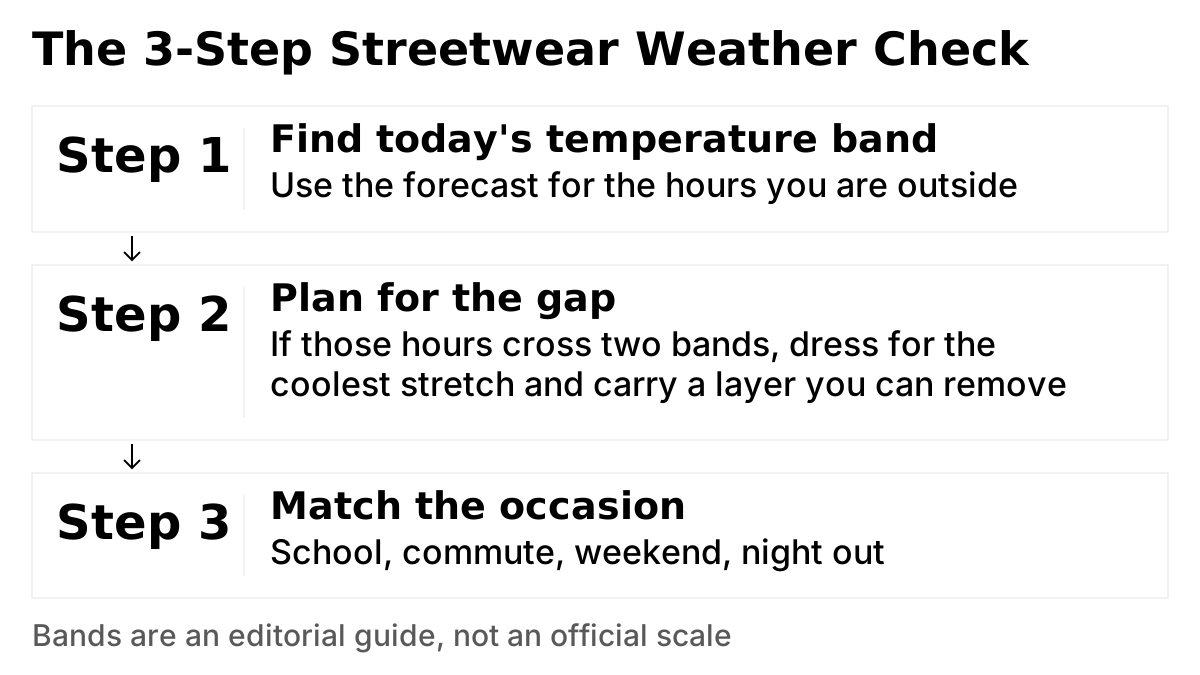
Style choices, such as colour or a statement sneaker, sit on top of those three decisions rather than in front of them.
Takeaway: Decide band, gap and occasion before you pick the hero piece.
Step 1 — Find today’s temperature band
Use the forecast high and low, then narrow them to the hours you will be outside: a day that peaks at 82°F at 3 p.m. is a mild-band day for someone outdoors only before 9 a.m. and after 7 p.m. If your outdoor hours stay inside one band, start from that row; if they cross a band, Step 2 applies. Celsius values below are rounded.
| Band | Range | Base layer | Outer layer | Footwear |
|---|---|---|---|---|
| Hot | 80°F and above (27°C+) | Loose short-sleeve tee or tank in cotton or linen | None, or an open short-sleeve shirt | Low-top sneakers, slides |
| Warm | 65–79°F (18–26°C) | Boxy tee or long-sleeve tee | Light overshirt or open camp-collar shirt | Low-top sneakers |
| Mild | 50–64°F (10–17°C) | Long-sleeve tee or light knit | Hoodie, denim or chore jacket | Sneakers, skate shoes |
| Cold | 32–49°F (0–9°C) | Long-sleeve tee plus hoodie or knit | Insulated jacket, fleece or wool overshirt under a shell | High-tops, leather sneakers, boots |
| Freezing | Below 32°F (below 0°C) | Thermal or long-sleeve base plus mid-layer | Insulated puffer or parka, hat, gloves | Water-resistant boots |
The table describes the minimum, not a uniform. A warm-band day lets you choose between a single tee and a tee with an overshirt; a cold-band day leaves little room to skip the outer layer. In hot and freezing bands, comfort and safety come before the look, which is why the summer and winter sections follow public safety guidance rather than trend reports. Once the band is set, the style direction is yours; the main types of street style show how far the same layers stretch.
Common mistake: Dressing for the temperature when you leave the house and ignoring the rest of the forecast. If you are still outside hours later, the reading at the door can be the wrong guide for most of your day.
Takeaway: Place your outdoor hours, not just the whole day, in one band, or note that they span two.
Step 2 — Plan for the gap between morning and afternoon
When your outdoor hours cross two bands, dress for the coolest stretch you will be outside and make the outer layer removable for the warmest one. The base layer should suit the warm stretch on its own; the carried layer covers the cool stretch. A zip hoodie, an overshirt or a light jacket you can tie, fold or carry suits this job; a heavy piece you cannot take off does not.
Melbourne shows why this step exists. The Bureau of Meteorology’s Olympic Park station (086338), with records from 2013 to 2026, gives these monthly averages:
| Month | Mean maximum | Mean minimum | Gap | Band of the mean minimum → mean maximum |
|---|---|---|---|---|
| January | 26.8°C (80°F) | 16.5°C (62°F) | 10.3°C (19°F) | Mild → edge of hot |
| July | 14.5°C (58°F) | 7.5°C (46°F) | 7.0°C (13°F) | Cold → mild |
For trip planning, that means a January visit needs a warm-to-hot base with a light layer for the cooler hours, and a July visit needs a mild-band base with a cold-band layer to carry. These are 13-year monthly averages for one station; they do not say when in the day the low or high arrives, so use the hourly forecast on the day to decide when the layer goes on or comes off.
Worked example (assumed inputs, not a measured day): forecast low 55°F, high 78°F; you are outside from 8 to 9 a.m. (about 58°F, mild band) and from 5 to 6 p.m. (about 74°F, warm band). Base: a boxy tee that suits the warm hour. Carried layer: a light overshirt or zip hoodie for the mild hour. Occasion: commute, so pick the overshirt and trousers that work on transit. For the city’s wider style habits, see how Melbourne’s weather shapes the outfit.
U.S. readers can apply the same check before a trip: look up the destination’s monthly normal on NOAA’s U.S. Climate Normals and compare the average maximum and minimum. If they fall in two bands, pack the removable layer.
Takeaway: Base layer for your warmest outdoor stretch, carried layer for your coolest.
Step 3 — Match the outfit to the occasion
The occasion decides how relaxed the cut, the graphics and the footwear can be. Weather sets the layers; the setting decides which version of those layers is appropriate.
| Occasion | What usually limits the outfit | Streetwear adjustments |
|---|---|---|
| School | The school’s written dress code | Follow the code first; keep graphics simple, choose hems that meet length rules, carry a hoodie for cold classrooms |
| Commute | Walking, transit, heated or cooled carriages | Removable outer layer, a bag that holds it, sneakers that walk well, one dark lower half that hides wear |
| Weekend | Very little | The best day for statement pieces, wider cuts and bolder colour |
| Night out | Venue norms and cooler evenings | Swap hoodie for overshirt or bomber, cleaner sneakers or boots, a darker palette |
For a night out, the face is part of the outfit too; the street style makeup looks guide pairs each look with a clothing direction.
School is the one setting where a rule sits above the look. Dress codes differ by district and school, so the formulas in this guide are starting points to adjust, not exceptions to the code. The commute favours function: you are moving between outdoor air and enclosed transport, so the outer layer must come off without wrecking the outfit underneath.
Common mistake: Getting the weather right and the setting wrong. A perfect cold-band layer stack still fails if the school bans hooded tops indoors or the venue expects something sharper than a fleece.
Takeaway: The weather picks the layers; the occasion picks the version of each layer.
The temperature × occasion outfit matrix
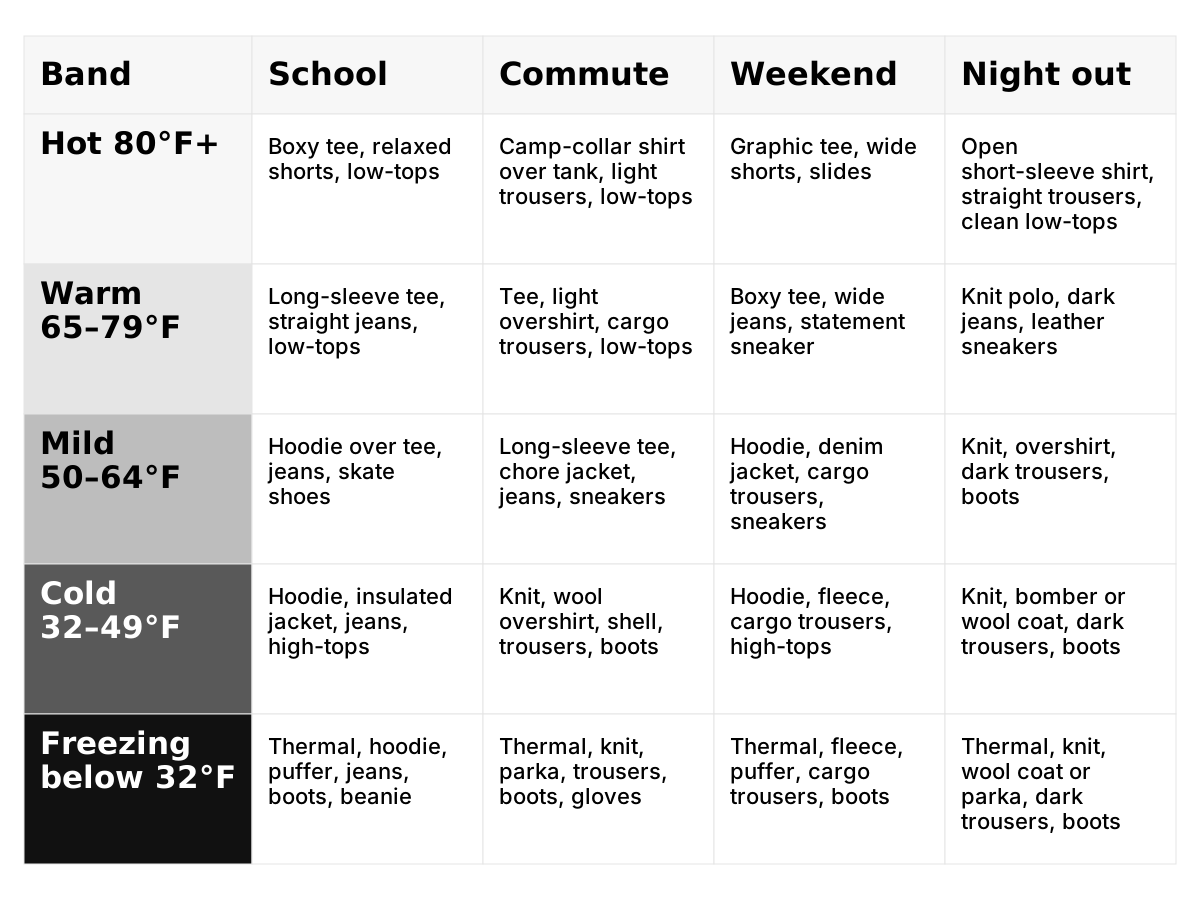
The matrix combines Steps 1 and 3 into a starting outfit for every band and occasion. Read across the row for today’s band and down the column for where you are going; then apply Step 2 if the day spans two bands.
| Band | School | Commute | Weekend | Night out |
|---|---|---|---|---|
| Hot (80°F+) | Boxy tee, relaxed shorts, low-tops | Camp-collar shirt over tank, light trousers, low-tops | Graphic tee, wide shorts, slides | Open short-sleeve shirt, straight trousers, clean low-tops |
| Warm (65–79°F) | Long-sleeve tee, straight jeans, low-tops | Tee, light overshirt, cargo trousers, low-tops | Boxy tee, wide jeans, statement sneaker | Knit polo, dark jeans, leather sneakers |
| Mild (50–64°F) | Hoodie over tee, jeans, skate shoes | Long-sleeve tee, chore jacket, jeans, sneakers | Hoodie, denim jacket, cargo trousers, sneakers | Knit, overshirt, dark trousers, boots |
| Cold (32–49°F) | Hoodie, insulated jacket, jeans, high-tops | Knit, wool overshirt, shell, trousers, boots | Hoodie, fleece, cargo trousers, high-tops | Knit, bomber or wool coat, dark trousers, boots |
| Freezing (below 32°F) | Thermal, hoodie, puffer, jeans, boots, beanie | Thermal, knit, parka, trousers, boots, gloves | Thermal, fleece, puffer, cargo trousers, boots | Thermal, knit, wool coat or parka, dark trousers, boots |
Each cell lists the top layers, a lower half and shoes; hot-band cells skip the outer layer, and school cells follow the code before the formula. You can swap a piece for one of similar weight and formality, such as a long-sleeve tee for a light knit or cargo trousers for straight jeans. Swaps that change warmth, such as a tee for a thermal, move you into a different band’s row.
Takeaway: Pick the cell for today’s band and setting, then swap like-for-like pieces to make it yours.
Summer streetwear outfits that stay cool
In hot weather, loose and light beats layered. Ready.gov’s extreme-heat guidance is to “wear loose, lightweight, light-colored clothing”, and that lines up with the strongest summer streetwear formulas: boxy tees, relaxed shorts, open short-sleeve shirts and breathable fabrics.
Four hot-band formulas that keep the streetwear shape without trapping heat:
- Boxy tee + relaxed shorts + low-tops. The roomy cut lets air move; keep the tee light in colour and the shorts above the knee or just below it.
- Open camp-collar shirt over a tank + light trousers. The open shirt gives you a second visual layer, and it comes off if the afternoon heats up.
- Oversized tee + wide light-colour cargo trousers. Works for the commute or a cooler evening; the volume reads as streetwear without heavy fabric.
- Tank + overshirt tied at the waist or carried. For hot days with a cooler start, this is Step 2 in summer form.
A cap or bucket hat and sunglasses finish most of these looks and add shade. Save hoodies and heavy denim for the mild band; at 85°F they cost comfort for a look that rarely survives the afternoon. If your day includes long stretches in the sun, follow the full Ready.gov heat guidance first and style second. A city with a mild start and a hot finish, such as Melbourne in summer, turns formula 4 into the default.
Takeaway: In the hot band, let loose, light and pale fabrics do the work and keep any layer open.
Winter streetwear outfits that layer without bulk
In cold weather, build the outfit in layers. Ready.gov’s winter guidance is to “wear layers of warm clothing”; our editorial addition is that three separate layers also keep the streetwear shape and let you adjust indoors: a base, a mid-layer with character, and an outer coat or shell.
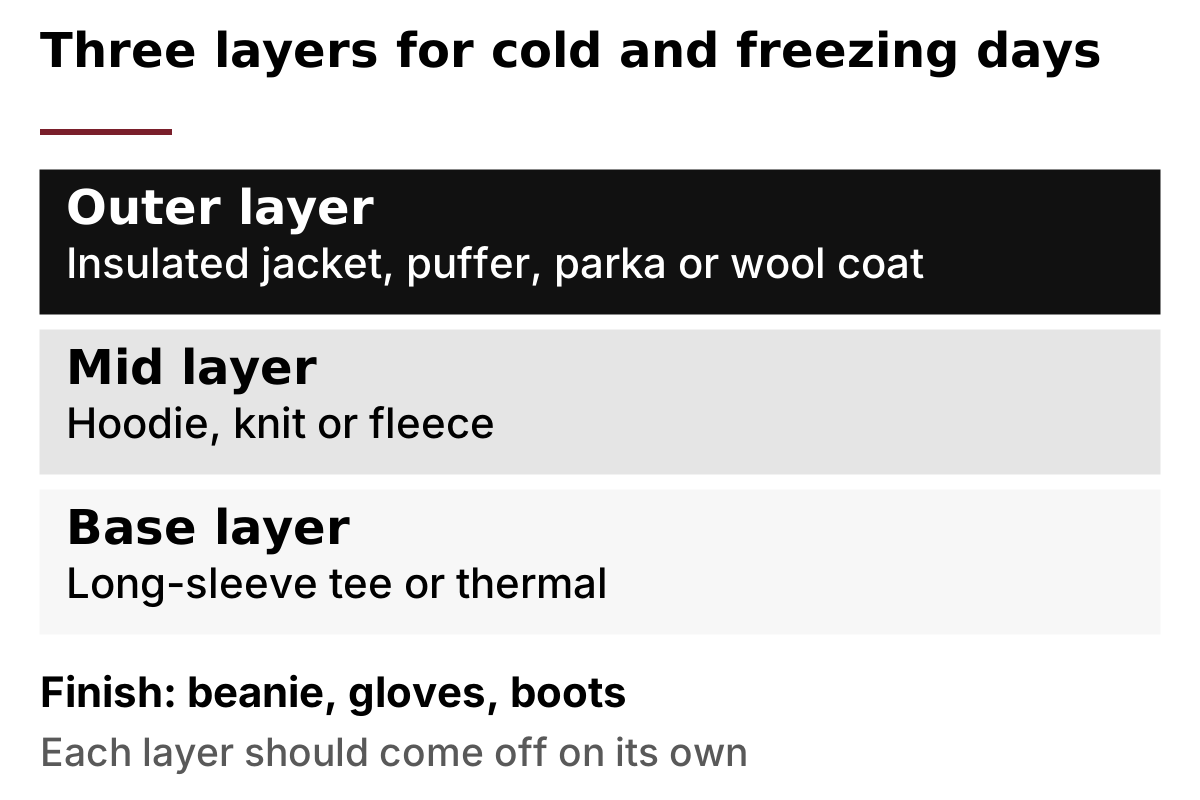
- Base layer: a long-sleeve tee or a thermal top. It sits against the skin, so it should feel comfortable on its own.
- Mid layer: the hoodie, knit or fleece. This is the streetwear signature layer and the one people see when you take your coat off indoors.
- Outer layer: an insulated jacket, puffer, parka or wool coat. In rain or wind, add a shell or choose a coat that handles wet weather; how warm any combination is depends on the fabrics, so judge it on the day.
Keep the volume where it looks deliberate. A cropped puffer over a longer hoodie, or a longline coat over a slim knit, gives a clear outline; three equally bulky pieces do not. Finish with a beanie, gloves and boots or high-tops with good grip when the forecast drops into the freezing band. On the commute, the mid-layer has to look complete on its own, because heated carriages and offices will push the coat off. Melbourne’s long habit of layering for changeable days is a useful model for cold-band dressing.
Takeaway: Build winter outfits as separate removable layers, and make the mid-layer good enough to be seen alone.
The core pieces behind most outfits
Around a dozen core pieces are the starting point for most cells of the matrix; cold and freezing cells also need the weather add-ons listed after the table. You do not need everything at once; start with the pieces that fit the bands your city spends most of the year in, using your monthly normals as the guide.
| Piece | Bands it covers | Role in the outfit |
|---|---|---|
| Plain white or grey boxy tee | Hot to cold (as base) | Base layer for almost every formula |
| Long-sleeve tee | Warm to freezing (as base) | Base for transitional days |
| Hoodie (zip or pullover) | Mild to freezing | Mid-layer and the most-used streetwear signature |
| Overshirt or chore jacket | Warm to cold | Removable layer for wide gaps |
| Denim jacket | Mild | Outer layer on dry mild days |
| Insulated jacket or puffer | Cold to freezing | Outer layer |
| Straight or relaxed jeans | Warm to freezing | Default lower half |
| Cargo trousers | Warm to cold | Utility lower half with streetwear volume |
| Relaxed shorts | Hot | Summer lower half |
| Clean low-top sneakers | Hot to mild | Default footwear |
| High-tops or boots | Cold to freezing | Grip and warmth |
| Cap and beanie | Hot (cap), cold (beanie) | Finishing piece and practical cover |
Weather add-ons for cold and freezing cells: a thermal base layer, a knit, a fleece, a shell for rain or wind, gloves and water-resistant boots. These are not interchangeable with the core pieces: a long-sleeve tee does not do a thermal’s job.
The core pieces are deliberately plain. Colour, graphics and statement sneakers can come later; the core pieces plus the add-ons for your climate make the matrix usable on most mornings. If you also want to plan a face to go with the outfit, see how to pair makeup with your outfit. More combinations sit in the Outfit Ideas section, and the Street Style section explains the looks these pieces add up to.
Takeaway: Buy for the bands your city actually has: plain bases, one good removable layer, and the add-ons only if your winters need them.
The pre-door checklist
Run six checks before you leave. They catch the gaps that the matrix alone cannot see, such as rain, a long walk or nowhere to stow a jacket.
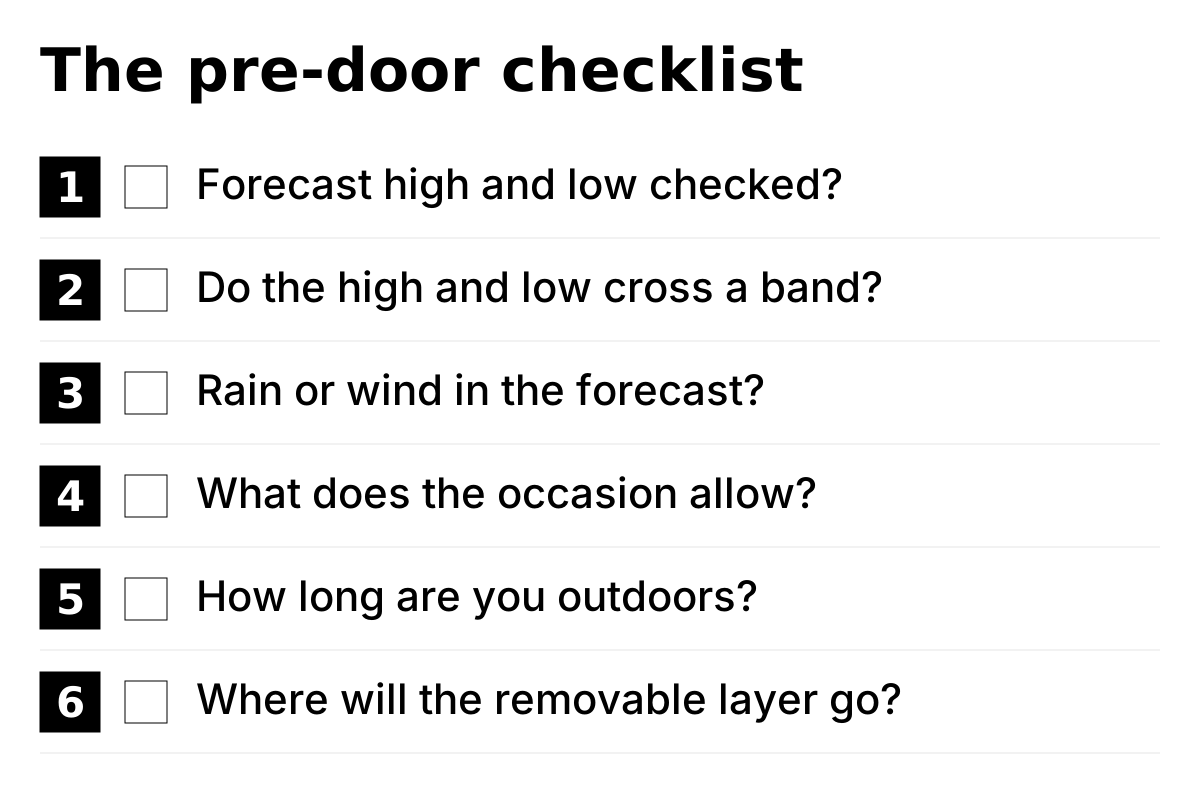
- Forecast high and low checked? Not the current temperature.
- Do the high and low cross a band? If yes, dress for the low with a removable layer.
- Rain or wind in the forecast? Swap to a shell and shoes that handle wet pavement.
- What does the occasion allow? School code, workplace norm or venue.
- How long are you outdoors? Note when as well as how long, and read the hourly forecast for those hours.
- Where will the removable layer go? A bag, a tote or a tie-around option; if there is nowhere, pick a lighter layer.
If all six answers point the same way, you are done. If they pull in different directions, for example a hot afternoon and a cool evening outdoors, use the Step 2 rule: base layer for the warm stretch, carried layer for the cool one, and a bag or tie-around plan for the layer in between.
Takeaway: Six quick checks turn the matrix into an outfit that still works at 6 p.m.
When this does not apply
The bands and formulas are an everyday city guide. They do not cover:
- Extreme heat, cold or storms. Follow official safety guidance, such as Ready.gov’s heat and winter pages, and treat style as secondary.
- Very humid or very dry climates. Humidity changes how hot a band feels; adjust one band up or down from experience.
- Strict dress codes or uniforms. School, workplace or venue rules come first.
- Sport, hiking or long outdoor work. Technical clothing does a different job from streetwear.
- Personal temperature differences. Some people run warm or cold; shift the bands to suit yourself.
- History or definitions. For where the look came from, read the origins of street style instead.
Takeaway: Treat the bands as a default and move them when climate, rules or your own comfort say otherwise.
How this guide was put together
The temperature bands, the matrix, the 3-step check and the checklist are this site’s editorial guidance, compiled for everyday city dressing; they are not test results or an official standard. Weather facts come from public sources: NOAA’s U.S. Climate Normals for the definition and use of 30-year normals, and the Australian Bureau of Meteorology’s Melbourne (Olympic Park) monthly statistics for the worked example. Safety lines quote Ready.gov. The streetwear definition comes from Dictionary.com, and the background on hip-hop style from NPR’s 2023 report on the Museum at FIT exhibition. All sources were accessed on 7 October 2026 and are listed under References below. No products were tested for this guide. Updated October 2026.
Takeaway: Weather figures and safety lines are sourced; the bands, matrix and checklist are editorial guidance.
Related reading
Pick the next read by what you need: the meaning of the term, a city example, or the face to match the outfit.
- What is street style? — Separate street style from streetwear before you build a look.
- Melbourne street style — See how one changeable-weather city dresses for two bands in a day.
- Street style makeup — Match a makeup look to the outfit you picked here.
- All articles — Browse every guide on the site.