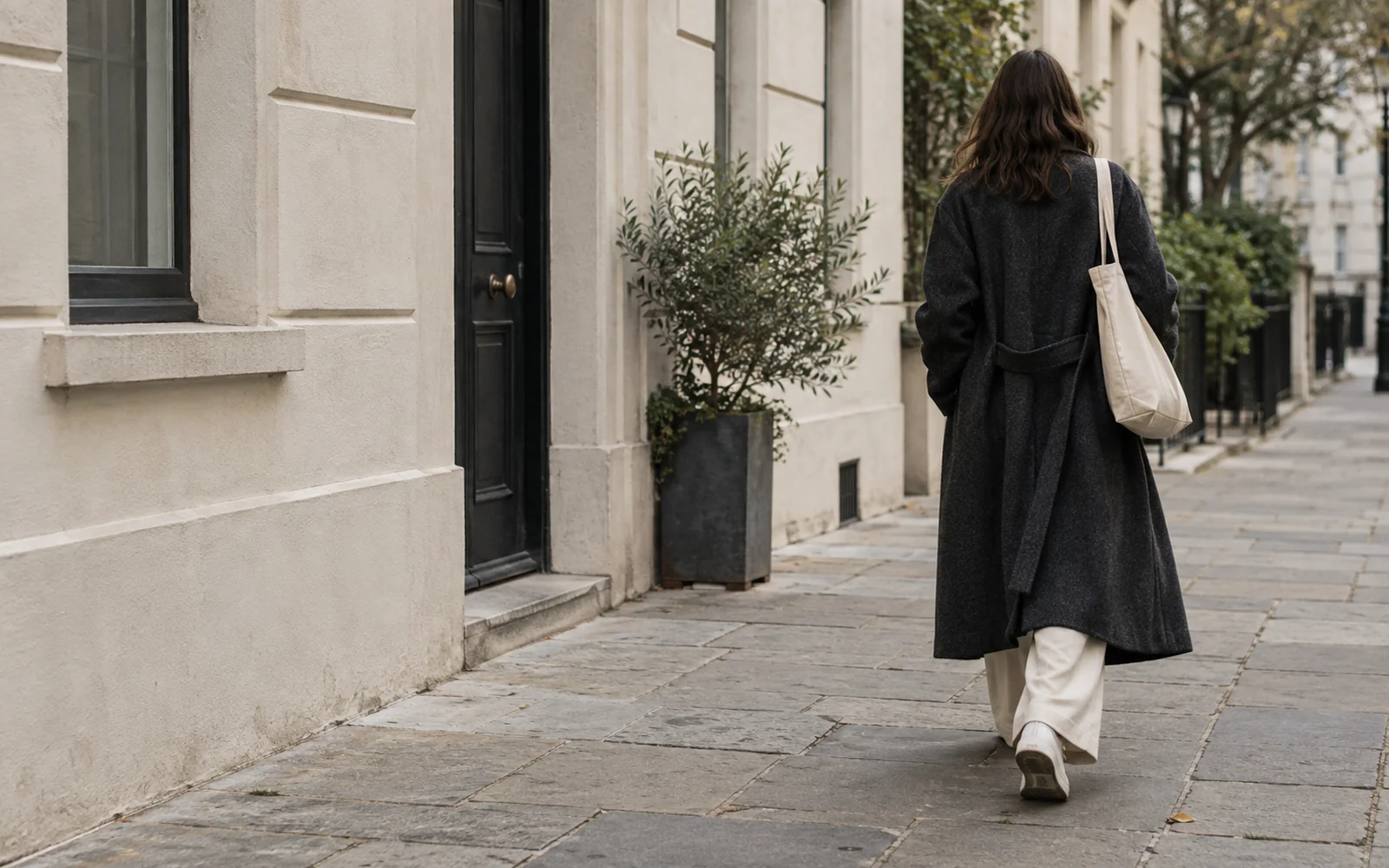
Treating street style and streetwear as the same thing sends you to the wrong advice: one is a way of dressing you observe, the other is a category of clothes you buy. Street style means what people actually wear in public, and the photographs that record it; streetwear is casual clothing such as hoodies, T-shirts and sneakers that came out of hip-hop, surfing and skateboarding culture.
Short answer: street style is fashion as it is worn on the street, by real people, mixed from any source: tailoring, vintage, sportswear or streetwear. The term also names the photography that records those outfits, from newspaper street columns to fashion-week sidewalk galleries. Streetwear is narrower: Dictionary.com defines it as fashionable casual clothes “originating in hip hop, surfing, or skateboarding culture, such as sneakers, T-shirts, and hoodies.” A streetwear outfit can be street style; a camel coat with loafers can be street style too.
This guide gives you the two meanings, a short sourced timeline, a table of the main types and a checklist for recognising them. If you came here to get dressed rather than to understand the term, go straight to the streetwear outfit matrix by temperature and occasion.
Key points:
- Street style describes a source (the street, real wearers); streetwear describes a product category.
- The V&A’s 1994–95 Streetstyle exhibition traced street clothing from 1940s Harlem zoot suits to 1990s New Age Travellers.
- Street style photography became a recognised genre through newspaper columns and, later, fashion-week coverage.
- The types in this guide are an editorial grouping, not an official taxonomy.
Street style vs streetwear: the short answer
Street style is how people wear clothes in public; streetwear is a set of clothes. Use “street style” when you are describing an outfit you saw or a photo of one, and “streetwear” when you are naming pieces such as hoodies, graphic tees, cargo trousers and sneakers.
| Question | Street style | Streetwear |
|---|---|---|
| What is it? | Everyday dress as worn in public, and the photography of it | A category of casual clothing |
| Where does it come from? | Any wearer, any city, any source of clothes | Hip-hop, surfing and skateboarding culture (Dictionary.com) |
| Typical pieces | Anything: tailoring, vintage, sportswear, designer, streetwear | Hoodies, T-shirts, sneakers, cargo trousers, caps |
| Who decides it? | The person wearing it | Brands and the communities that wear them |
| How it is recorded | Street photography, fashion-week galleries, social media | Product drops, lookbooks, retail |
| Can it be formal? | Yes, a suit with sneakers counts | Rarely; it is casual by definition |
| Question it answers | “How do people actually dress?” | “What clothes belong to this style?” |
The overlap is real: a hoodie and sneakers photographed outside a fashion show is both. The difference matters when you look for advice. Street style coverage shows combinations; streetwear guides tell you which pieces to own and how to wear them, which is what the streetwear core-pieces list does.
Takeaway: Say “street style” for the way an outfit is worn and “streetwear” for the clothes themselves.
The two meanings of street style
The term carries two meanings that often appear in the same sentence. The first is cultural: dress that grows on the street, through subcultures and ordinary people, rather than being handed down from designers. The second is photographic: pictures of what people wear in public.
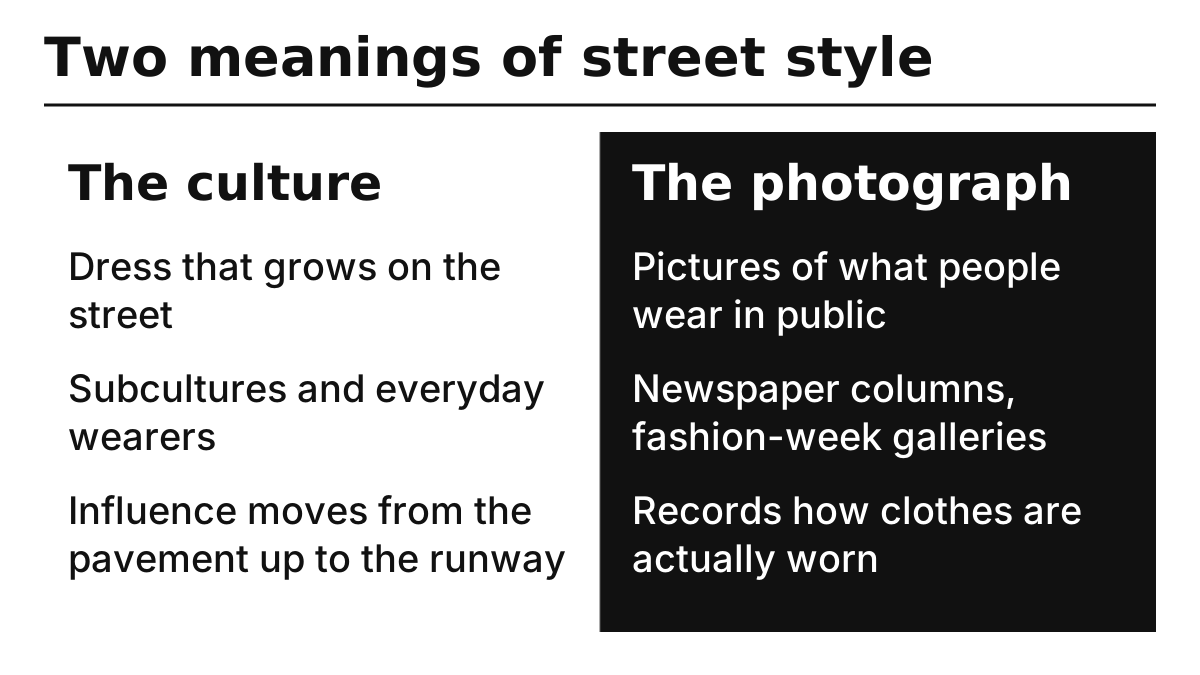
The cultural meaning. When the V&A staged Streetstyle: From Sidewalk to Catwalk, 1940 to Tomorrow in 1994–95, the exhibition text described street clothing as the product of youth cultures: “Bikers, Surfers, Rockabillies and Hipsters rub shoulders with Goths, Rockers, Rastas and Punks.” It also showed high-fashion designers who, in the exhibition’s words, “have all acknowledged the street as a potent source of inspiration.” In this sense, street style is a direction of influence: from the pavement up to the runway.
The photographic meaning. A photograph of a stranger’s outfit is also called street style. WWD reports that the New York Times first published a group of Bill Cunningham’s impromptu photos in December 1978, which led to a regular role; his “On the Street” column documented passers-by for decades, and NBC News described him as capturing “the fashions of everyday New Yorkers.” Today the same label covers fashion-week sidewalk galleries and off-duty celebrity outfits; GQ’s Street Style section, for example, mixes both.
Takeaway: Check whether a writer means the culture or the photograph before you take their advice.
Where street style came from: a short timeline
Street style has no single start date. The table lists dated, sourced moments that shaped how the term is used today, not a complete history.
| When | What happened | Why it matters | Source |
|---|---|---|---|
| 1940s | Zoot suits in Harlem, the starting point of the V&A’s street clothing survey | The earliest dress in that museum survey | UAL Exhibiting Fashion record of the V&A show |
| Post-war decades | Youth cultures such as Teddy Boys, Bikers, Rockers, Rockabillies, Surfers, Punks and Goths build their own dress codes | Subculture dress codes form much of the V&A survey | Same |
| 1970s | Hip-hop’s early days in New York; according to the Museum at FIT curators interviewed by NPR, dressers stood out with custom belt buckles and fat laces on small budgets | Hip-hop style is one of streetwear’s roots | NPR, 2023 |
| December 1978 | According to WWD, the New York Times first publishes a group of Bill Cunningham’s impromptu street photographs, which leads to a regular role and his “On the Street” column | Street style photography gets a regular newspaper home | WWD, 2025 |
| 1994–95 | The V&A stages Streetstyle: From Sidewalk to Catwalk, 1940 to Tomorrow | A major museum treats street dress as design history | UAL Exhibiting Fashion |
| 2016 | Cunningham dies after decades of photographing everyday New Yorkers | Ends his own decades of street photography | NBC News, 2016 |
| 2023 (8 February–23 April) | The Museum at FIT presents Fresh, Fly, and Fabulous: Fifty Years of Hip Hop Style, marking the 50th anniversary of hip hop’s birth | Hip-hop dress shown as fashion history | Museum at FIT press release, 2023 |
| 2025 | WWD reports that New York Historical has acquired Cunningham’s archive | Street style photography enters a museum collection | WWD, 2025 |
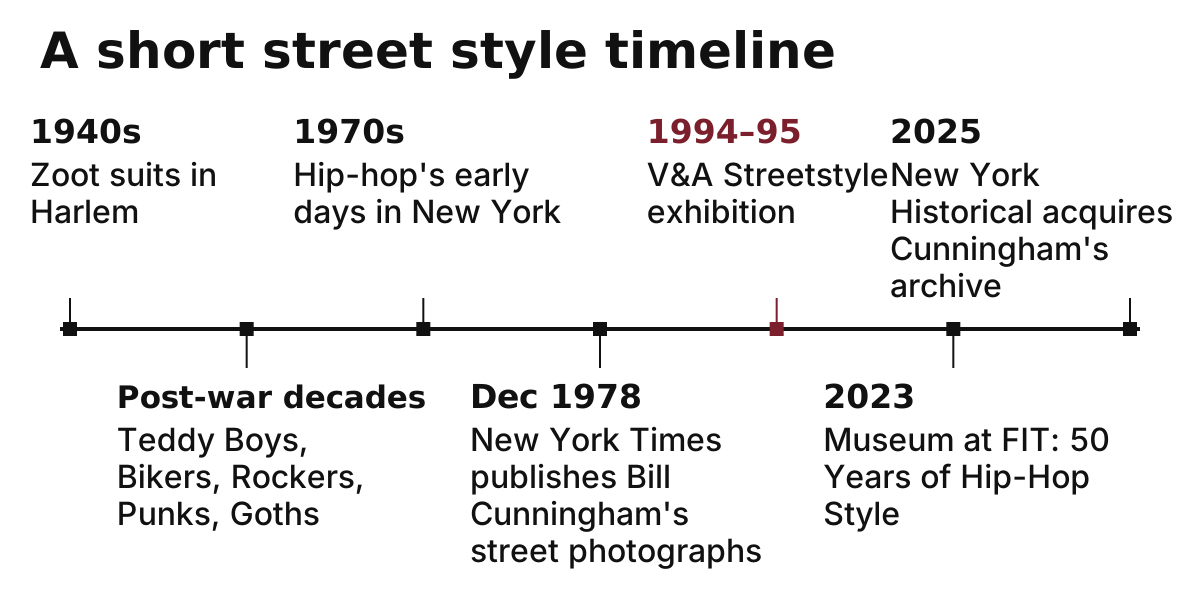
Read together, these examples show wearing, photographing and collecting feeding into each other; that is this guide’s reading of a few dated moments, not a fixed historical sequence. Streetwear, the clothing category, has its own strand through hip-hop, skate and surf culture. Melbourne has its own chapter, built on laneways and changeable weather, covered in the Melbourne street style guide.
Takeaway: Read street style as a long conversation between wearers, photographers and designers, not a trend that started online.
The main types of street style
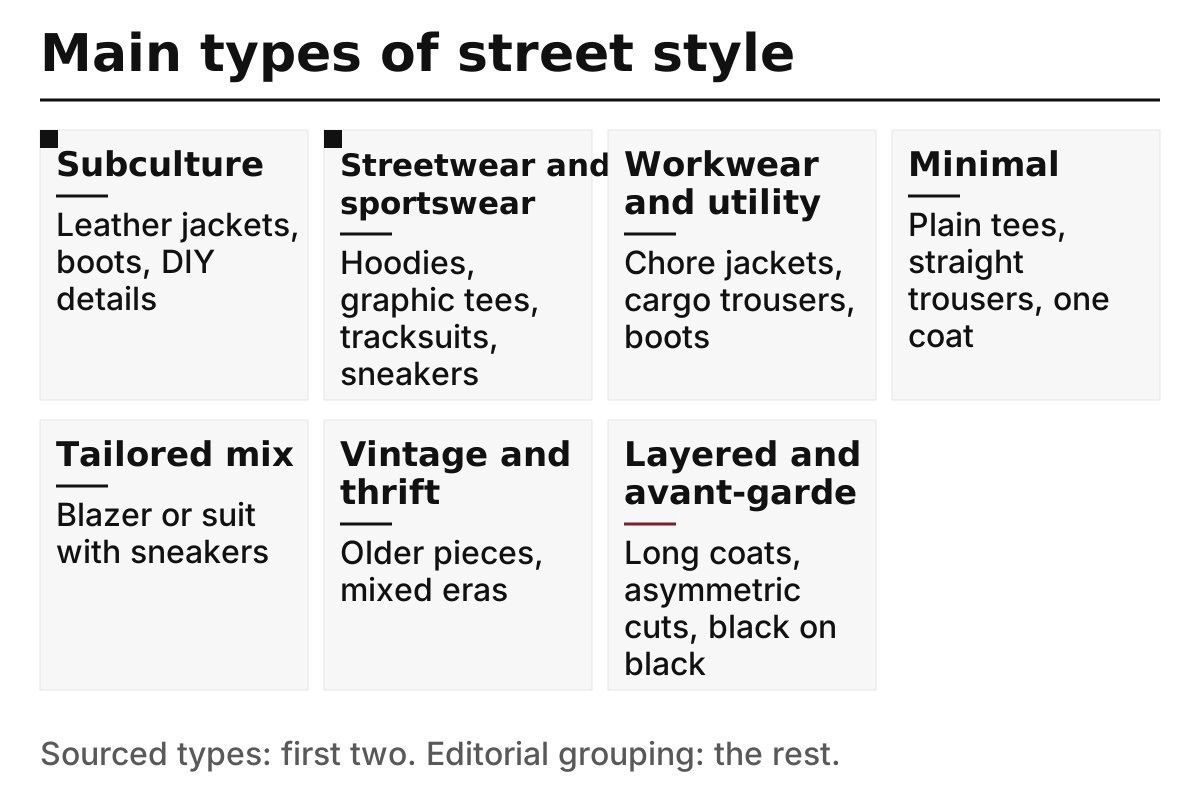
This guide uses seven groups to name what you see: subculture, streetwear and sportswear, workwear and utility, minimal, tailored mix, vintage and thrift, and layered or avant-garde. The first draws on the subcultures named in the V&A exhibition and the second on the dictionary definition of streetwear; the other five are our editorial grouping. None is an official taxonomy, and one outfit can mix two.
| Type | Key pieces | How to recognise it | Roots |
|---|---|---|---|
| Subculture (punk, goth, rocker, biker) | Leather jackets, boots, band or DIY details | A strong, rule-bound uniform with a clear group identity | V&A Streetstyle survey |
| Streetwear and sportswear | Hoodies, graphic tees, tracksuits, sneakers, caps | Casual athletic pieces worn with deliberate proportion | Hip-hop, skate and surf culture |
| Workwear and utility | Chore jackets, cargo trousers, canvas, boots | Pockets, sturdy fabrics, muted colours | Editorial grouping |
| Minimal | Plain tees, straight trousers, clean sneakers, one coat | Few pieces, neutral palette, sharp fit | Editorial grouping |
| Tailored mix | Blazer or suit with sneakers, knitwear | Formal pieces worn casually | Editorial grouping |
| Vintage and thrift | Older pieces, mixed eras, unique finds | Garments that clearly predate the current season | Editorial grouping |
| Layered and avant-garde | Long coats, asymmetric cuts, black on black | Volume and layering as the main statement | Editorial grouping |
Designers have long drawn on what people wear: Cooper Hewitt describes Willi Smith as a pioneer of “street couture”, which it defines as “fashion inspired by the creativity of people from the cities to the suburbs.” That is the direction of influence from the cultural meaning above, not a definition of any one type in the table. For the streetwear and sportswear type in practice, the summer and winter formulas show how the pieces change with the weather.
Takeaway: Name the type by its key pieces first; most outfits combine one main type with one accent.
How to recognise street style
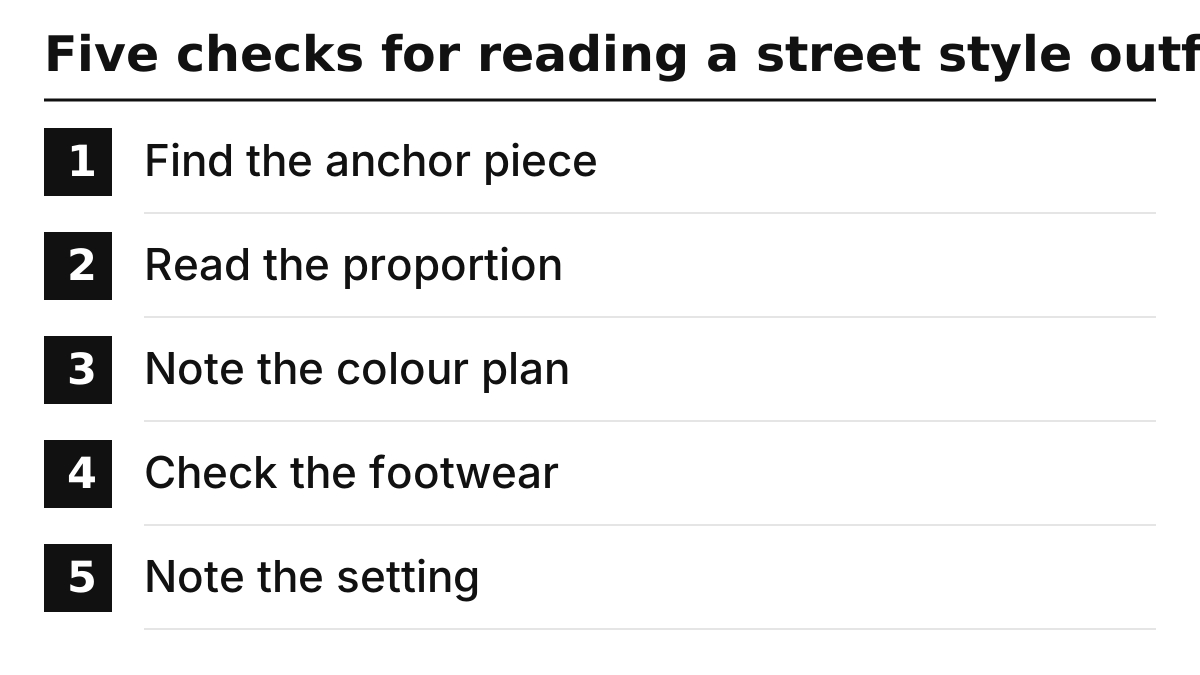
Read any street style outfit through five things: the anchor piece, the proportion, the colour plan, the footwear and the setting. They work on a fashion-week gallery, a social feed or a person walking past you.
- Find the anchor piece. One item usually carries the look: a coat, a jacket, a pair of trousers or sneakers.
- Read the proportion. Oversized top with slim bottom, or the reverse, or volume throughout.
- Note the colour plan. Name the main colour, the supporting colour and any accent; black-on-black and tonal looks are a type of their own.
- Check the footwear. Sneakers with tailoring, boots with dresses and loafers with denim each change how formal a look reads.
- Note the setting. A fashion-week sidewalk, a school gate and a laneway café produce different versions of the same type.
Once you can name the anchor, proportion and type, you can translate the look to your own wardrobe. The Outfit Ideas section turns those translations into day-to-day combinations, and the street style makeup guide covers the face that goes with each type.
Takeaway: Anchor, proportion, colour, footwear and setting tell you more about a look than any label.
Common misreadings
Three confusions are worth correcting: treating street style as a synonym for streetwear, limiting it to fashion-week guests, and calling it a social-media invention.
“Street style means streetwear.” To tell which one a writer means, check whether they are naming pieces (streetwear) or describing how someone combined them (street style).
“Street style is what fashion-week guests wear.” Fashion-week galleries are one version, but the term covers ordinary wearers too, which is what Cunningham’s work documented for decades.
“Street style is a new, social-media trend.” The V&A was surveying street clothing back to the 1940s in a 1994 exhibition, and newspaper street photography predates social media by decades.
Common mistake: Copying a fashion-week street style photo piece for piece. If a photo comes from a fashion week, the outfit was chosen for that setting; take the anchor, proportion and colour plan, and rebuild the outfit from pieces you own and the weather you have.
Takeaway: Treat a street style photo as a pattern to adapt, not an outfit to replicate.
When this does not apply
This guide explains a term. It does not:
- Rank trends or brands. No brand mentioned here endorses this site, and trend coverage dates quickly.
- Give a complete fashion history. The timeline lists dated, sourced moments only.
- Define every subculture. Each historical type deserves its own reading; the V&A record is a starting point.
- Tell you what to wear today. For that, use the temperature-band outfit guide and its pre-door checklist.
- Feature real passers-by. This site does not publish photos of identifiable people; illustrations are generated.
Takeaway: Use this page for the meaning and the map, and the outfit guides for the getting-dressed part.
Terms used in this guide
Six terms do most of the work in street style coverage, and two of them, street style and streetwear, are the ones most often swapped.
| Term | Meaning here |
|---|---|
| Street style | Everyday dress as worn in public, and the photography of it |
| Streetwear | Casual clothing from hip-hop, surfing and skateboarding culture (Dictionary.com) |
| High street | British term for mainstream main-street retail (Collins) |
| Street couture | Cooper Hewitt’s term for fashion inspired by people “from the cities to the suburbs” |
| Subculture | A group with its own shared dress code, such as punks or goths |
| Anchor piece | The item an outfit is built around |
For the Melbourne angle on these terms, the Melbourne section collects the city guides, and the Street Style section lists every explainer on the site.
Takeaway: Keep the six terms straight and most street style coverage becomes easy to read.
How this guide was put together
Definitions come from Dictionary.com (streetwear) and Collins via Dictionary.com (high street). The historical framing comes from the University of the Arts London’s Exhibiting Fashion record of the V&A’s 1994–95 Streetstyle exhibition, Cooper Hewitt’s Willi Smith: Street Couture page, NPR’s 2023 report on the Museum at FIT’s hip-hop style exhibition, and WWD and NBC News coverage of Bill Cunningham. GQ’s Street Style section is cited only as an example of current media usage. The modern types are an editorial grouping by this site, not a research classification. All sources were accessed on 7 October 2026 and are listed under References. This site is independent and is not the street style blog that previously used this domain. Updated October 2026.
Takeaway: Dates and definitions come from the listed sources; the seven-group types table is editorial.
Related reading
Pick the next read by what you want to do next: get dressed, read a city, or match the makeup.
- Streetwear outfits by temperature and occasion — Turn the streetwear type into an outfit for today’s weather.
- Melbourne street style — See how one city’s climate and laneways shape its street dress.
- Street style makeup — Pick a makeup look that matches each street style type.
- All articles — Browse every guide on the site.