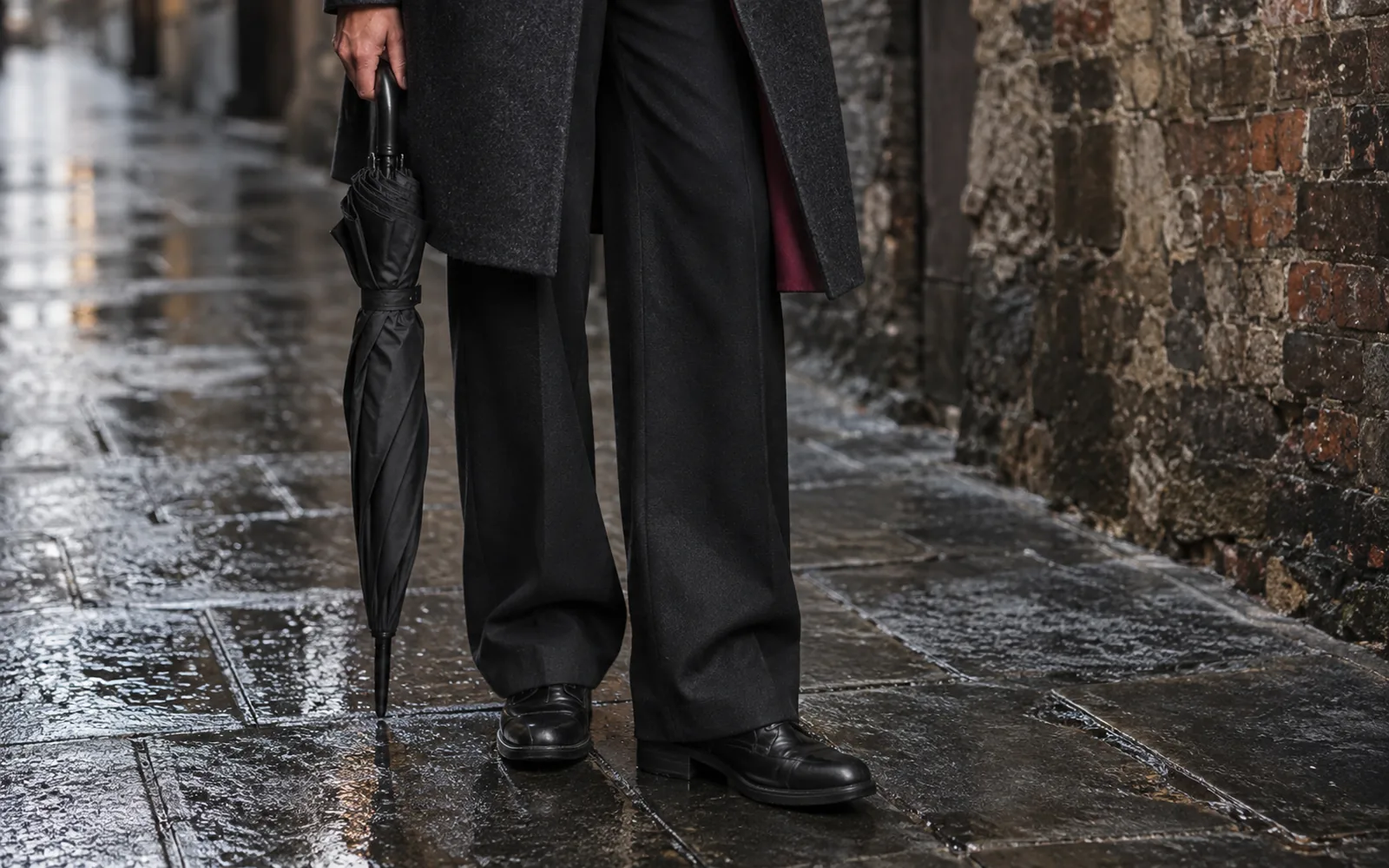
Packing for a single temperature is the wrong way to dress for Melbourne: at the city’s Olympic Park weather station, the average summer maximum and minimum sit about 10°C (18°F) apart. Melbourne street style answers that with layers you can take off, a mostly dark palette with one accent, shoes built for walking laneways, and a mix of local, independent and vintage pieces.
Short answer: Melbourne street style, as local fashion people have described it, is defined less by a single trend than by how people handle the weather and the walking city. Local designers, stylists and boutique owners interviewed by the Sydney Morning Herald in 2017 described “four seasons in the one day”, said Melbourne “is famous for loving black”, and recommended a long lightweight coat and comfortable shoes for the laneways. The Bureau of Meteorology’s 2013–2026 averages give the climate background: the winter average maximum is about 15°C (59°F) and the average minimum about 8°C (46°F), and every season shows a gap of 7–10°C between the two.
This guide explains the four traits, how each season changes the outfit, where the look is easiest to see, how menswear and womenswear differ, and what the 2026 festival calendar confirms. It describes general patterns, not every Melburnian, and it does not use photos of real passers-by. For the definition of the term itself, read what street style means.
Key points:
- Layering for changeable weather was the first trait local fashion people named in 2017.
- Dark bases with one moveable accent come from the same interviews.
- Walkable shoes matter in a city of laneways and arcades.
- The city’s long-running fashion festival now calls itself Australian Fashion Festival.
What defines Melbourne street style
Four traits stand out in how local fashion people described the city’s dressing in 2017: layering for changeable weather, a dark base palette, comfortable shoes for walking, and a mix of local design and vintage. We compiled them from a Sydney Morning Herald Traveller guide in which Melbourne designers, stylists and boutique owners answered the same questions about the city’s style; how you borrow them today is our editorial suggestion.
| Trait | How it shows up | What locals said (SMH Traveller, 2017) |
|---|---|---|
| Layering | Removable mid-layers and a long light coat | “You can be struck with four seasons in the one day, so you must be prepared for anything” |
| Dark palette | Black or charcoal bases with one accent | “Melbourne is famous for loving black”; “all black with a touch of colour” |
| Walkable shoes | Flat boots, leather sneakers, sturdy soles | Comfortable shoes “for exploring the city’s many cobbled laneways” |
| Local and vintage mix | Independent labels next to older finds | “We love to mix vintage and local design” |
The traits are linked. Layers make a dark palette practical, because black and charcoal pieces combine in any order. The accent, often a scarf, bag or hat, is the part that moves when the layers change; one interviewee called it “one bold accessory … that can be moved if the layers change.” Read them as a pattern described by people in the industry, not a dress code: the same interviews also stressed diversity and that “no one is afraid to be different.”
Takeaway: To borrow the look, start with layers and a dark base, then add one accent you can move.
How Melbourne’s weather shapes the outfit
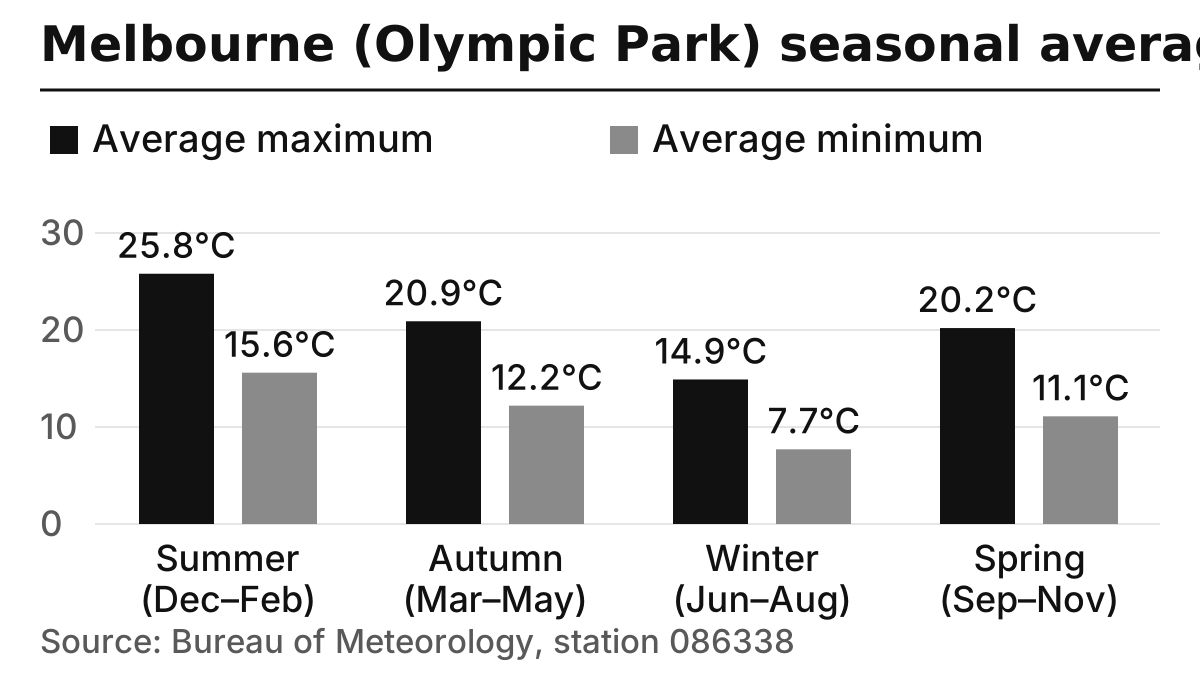
Melbourne’s climate gives the background to the layering advice. The Bureau of Meteorology’s Olympic Park station (086338) shows a gap of 7–10°C between the average maximum and minimum in every season, and more rain days in winter and spring than in summer. Temperatures below average the station’s three monthly means for each season; rain days add the three monthly averages; the gap is calculated before rounding. Single days run warmer, colder or wetter.
| Season (Australia) | Average maximum | Average minimum | Gap (max − min) | Rain days (≥1 mm, season total) | What it means for the outfit |
|---|---|---|---|---|---|
| Summer (Dec–Feb) | 25.8°C (78°F) | 15.6°C (60°F) | 10.2°C (18°F) | 15.2 | Tee or light shirt, an overshirt for evenings |
| Autumn (Mar–May) | 20.9°C (70°F) | 12.2°C (54°F) | 8.7°C (16°F) | 21.1 | Long-sleeve base, light jacket, first knits |
| Winter (Jun–Aug) | 14.9°C (59°F) | 7.7°C (46°F) | 7.2°C (13°F) | 26.8 | Knit or hoodie, long coat, water-resistant shoes |
| Spring (Sep–Nov) | 20.2°C (68°F) | 11.1°C (52°F) | 9.2°C (16°F) | 24.9 | Long-sleeve base, carryable jacket, umbrella |
Source: Bureau of Meteorology, Melbourne (Olympic Park), monthly means 2013–2026; seasonal temperatures are this site’s averages of those means, and rain days are their sums.
Two practical rules follow. First, Melbourne’s seasons are the reverse of North America’s, so a July trip means winter clothing. Second, the averages do not tell you what a given day will do, so use the forecast for the hours you will be out; if those hours span a wide range, our suggestion is a long light coat or zip mid-layer you can carry rather than one heavy piece. The same logic, applied to any city, is Step 2 of the streetwear weather check, which plans for a day that crosses two temperature bands.
Takeaway: In Melbourne, plan for the low end of the day’s range and make the top layer easy to carry.
Where to see it: laneways and arcades
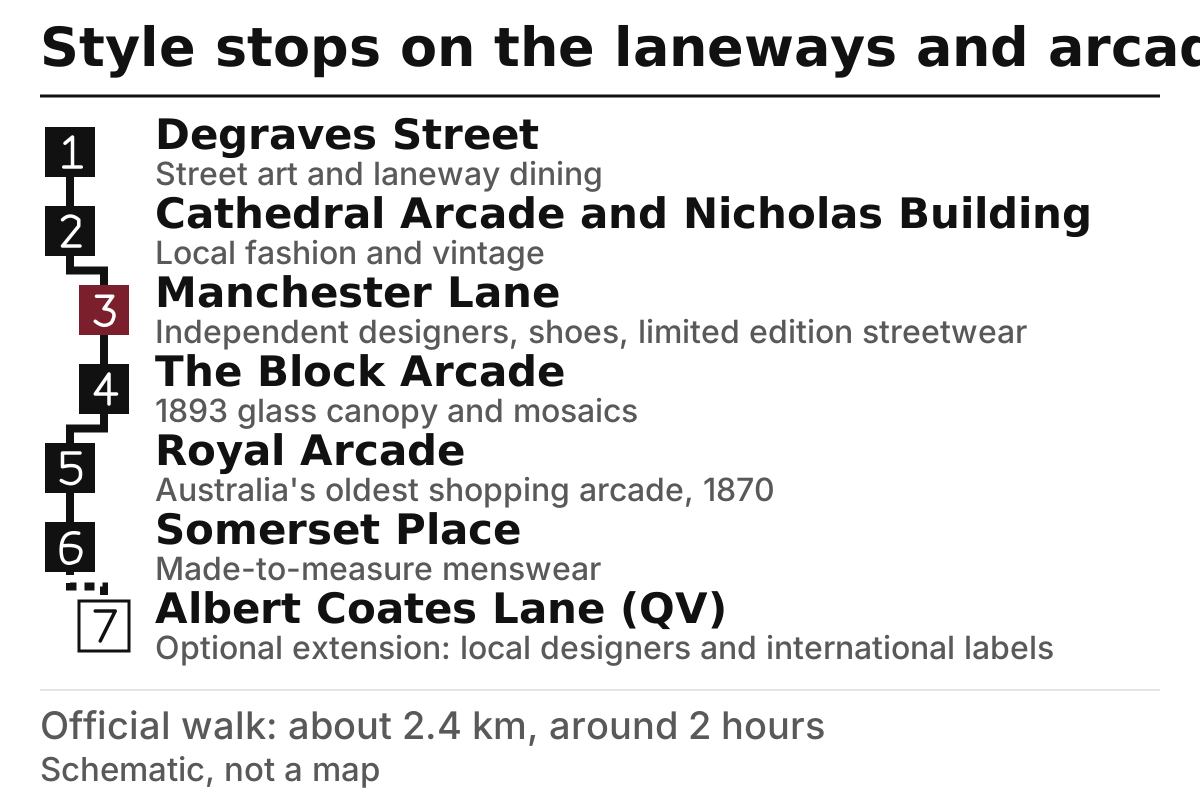
The City of Melbourne’s “Iconic laneways and arcades walk”, about 2.4 km and around two hours, lists several clothing-related stops in the city centre. The table picks those stops and adds one optional extension the guide lists separately under “More to explore”.
| Place | What the City of Melbourne says is there | Why it matters for style-watching |
|---|---|---|
| Degraves Street | “One of Melbourne’s most recognised laneways”, with street art and laneway dining, opposite Flinders Street Station | The first stop on the city’s walk |
| Cathedral Arcade and the Nicholas Building | Art Deco arcade leading to a 1926 building now filled with artists’ studios; local fashion and vintage in the ground-floor arcade | Where independent and vintage pieces meet |
| Manchester Lane | Named for 1860s fabric factories; today “independent designers, chic shoes and limited edition streetwear” | Textile history and current streetwear on one lane |
| The Block Arcade | An 1893 glass canopy and mosaics | Historic setting for a dressed-up walk |
| Royal Arcade | “Australia’s oldest shopping arcade, dating back to 1870” | Architecture as backdrop |
| Somerset Place | Bespoke footwear and made-to-measure menswear | Tailored side of Melbourne style |
| Albert Coates Lane (QV), optional extension | A newer laneway within QV Melbourne with local designers and international labels | Contemporary retail mix; not part of the 2.4 km walk |
Treat the table as a guide to areas rather than a store list, and confirm current shops before you go; this site does not recommend or rank individual shops. The narrow, often cobbled lanes also explain why locals stress comfortable shoes. More city guides sit in the Melbourne section.
Takeaway: Walk the laneways and arcades to see the look in its setting, and wear shoes that can do two hours.
Menswear and womenswear notes
The four traits apply across menswear and womenswear; what changes is the silhouette and the accent. The notes below are editorial examples built from the 2017 interviews and the weather table, not a survey of what every Melburnian wears. The Street Style section explains the wider types these examples belong to.
| Menswear | Womenswear | |
|---|---|---|
| Base | Dark knit or tee, straight or wide trousers | Dark knit or tee, wide trousers, midi skirts or dresses |
| Outer layer | Long lightweight coat, chore jacket or overshirt | Long trench or lightweight coat, cropped jacket over longer layers |
| Shoes | Leather sneakers, boots, made-to-measure leather shoes | Flat boots, leather sneakers, comfortable flats |
| Accent | One bold accessory: hat, scarf, bag | One bold accessory that moves with the layers |
| Local touch | Workwear and tailored pieces from independent makers | Independent labels mixed with vintage |
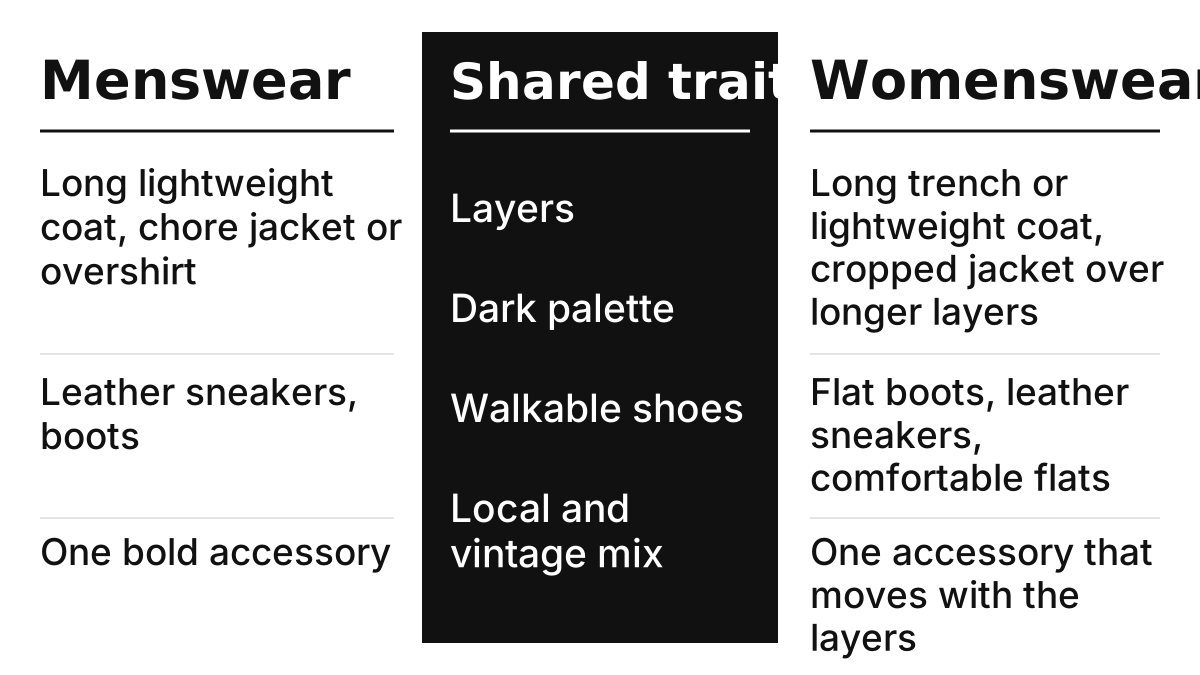
For menswear, the tailored side of the city shows in places such as Somerset Place’s made-to-measure offer, while laneways like Manchester Lane carry streetwear. For womenswear, interviewees pointed to “a long, lightweight coat” and “comfortable shoes for exploring the city’s many cobbled laneways” as the essentials, with vintage and local labels mixed in. Either way, the outfit works because each layer looks finished on its own. To map these looks onto general types, compare them with the main types of street style; for the face that goes with them, see the street style makeup guide.
Takeaway: Use the table as examples to adapt, not as rules for either wardrobe.
Melbourne street style in 2026: what is confirmed
One change is confirmed in the sources used here, and it is institutional, not a trend: the city’s long-running fashion festival has a new name. Its official website says, “After 30 landmark years, Melbourne Fashion Festival is entering a new era as Australian Fashion Festival”, and describes itself as “born and based in Melbourne”.
| Announced on the festival’s website | Not given on the festival website pages we checked (7 October 2026) |
|---|---|
| The festival now calls itself PayPal Australian Fashion Festival | A defining “Melbourne look” for 2026 or 2027 |
| The next festival runs February 19 to March 06, 2027 | The 2027 designer line-up |
| New regional fashion series in Bendigo and Shepparton | Full dates and year for the regional series |
| An Independent Program in studios, exhibitions and open spaces across Melbourne and regional Victoria | Which venues the Independent Program will use |
All of the left-hand column comes from one source, the festival’s own website, so it records what the festival announced rather than independent confirmation. For a visitor, the practical point is the date range: if you want to see festival dressing, the 2027 festival runs from 19 February to 6 March. We have not found a reliable source that defines a 2026 Melbourne trend, so this guide does not invent one.
Common mistake: Treating a festival street style gallery as everyday Melbourne. Event galleries show what people wore to an event; they do not represent all everyday dressing in the city.
Takeaway: Use the festival dates to time a visit, and the four traits as a starting point for everyday dressing.
Dressing for Melbourne as a visitor
Pack basics for the season you arrive in, and choose one removable layer each day from the forecast: a light overshirt in summer, a zip mid-layer under a coat in winter. The checklist below turns the climate table and the four traits into an editorial packing list.
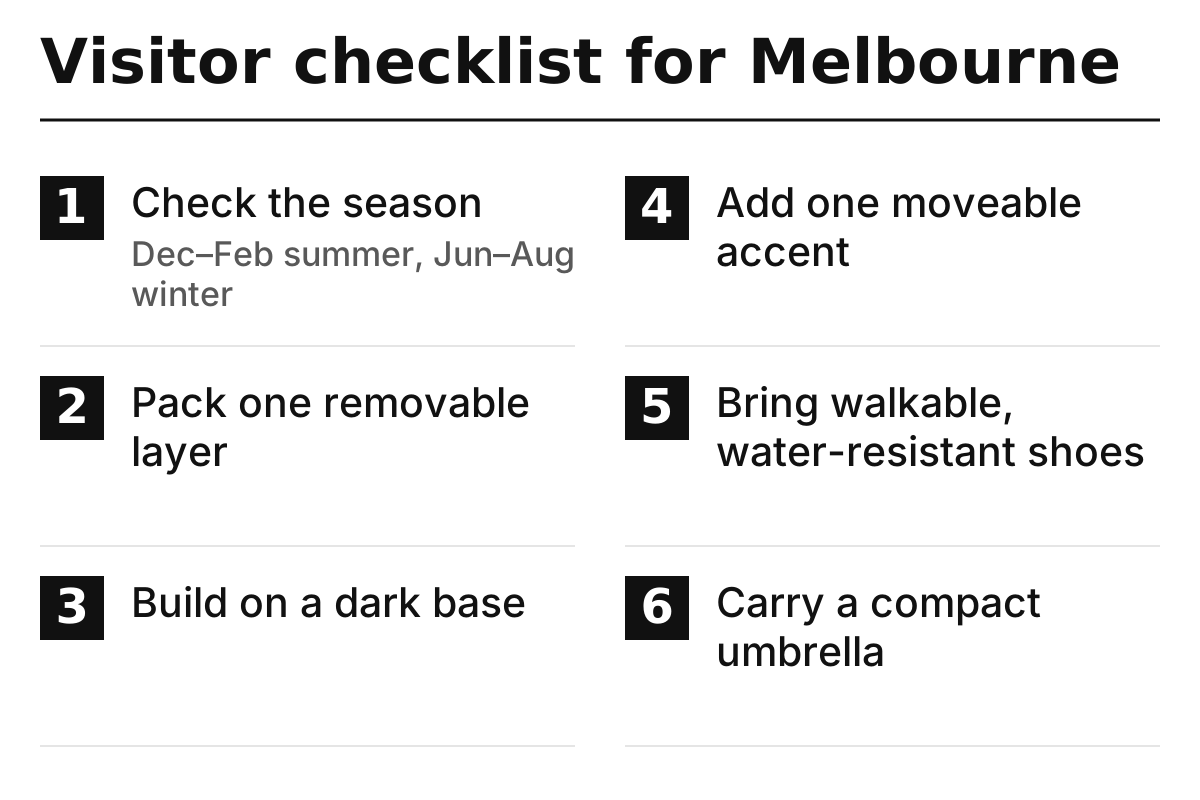
- Check the season. December to February is summer; June to August is winter.
- Pack one removable layer. A long light coat, overshirt or zip mid-layer.
- Build on a dark base. Black, charcoal or navy pieces combine in any order.
- Add one moveable accent. A scarf, bag or hat that still works when a layer comes off.
- Bring walkable, water-resistant shoes. Winter and spring carry the most rain days.
- Carry a compact umbrella in autumn, winter and spring.
For outfit formulas by temperature, use the temperature × occasion matrix and its pre-door checklist, and browse the Outfit Ideas section for more combinations.
Takeaway: Pack for the arrival season and pick each day’s removable layer from the forecast.
When this does not apply
This guide describes common patterns in central Melbourne. It does not:
- Describe every Melburnian. The traits come from interviews and climate data, not a street survey.
- Cover the rest of Australia. Other cities have different climates and habits.
- Predict a single day’s weather. Use the Bureau of Meteorology forecast; the table shows averages.
- Recommend shops. Laneway shops change; the table lists areas described by the City of Melbourne.
- Use the 2017 interviews as current trend data. They record how local fashion people described the city in 2017, not this season’s pieces.
Takeaway: Use the traits as a starting pattern and the forecast for the actual day.
How this guide was put together
Climate figures come from the Australian Bureau of Meteorology’s monthly statistics for Melbourne (Olympic Park), station 086338, covering 2013–2026; seasonal temperatures are this site’s averages of the three monthly means, rain days are the sums of the three monthly averages, gaps are calculated before rounding, and Fahrenheit values are converted and rounded. Laneway and arcade descriptions quote the City of Melbourne’s “Iconic laneways and arcades walk”. Festival facts come from the Australian Fashion Festival website, a single official source. The four traits draw on attributed comments from local designers, stylists and boutique owners in a Sydney Morning Herald Traveller guide dated 20 October 2017; individuals are not named here. The menswear and womenswear notes and the visitor checklist are editorial summaries. All sources were accessed on 7 October 2026 and are listed under References. This site is independent and is not the Melbourne street style blog that previously used this domain; see About. Updated October 2026.
Takeaway: Climate, laneway and festival facts are sourced; the traits summary, examples and checklist are editorial.
Related reading
Pick the next read by what you need: an outfit for today’s forecast, the meaning of the term, or a makeup look.
- Streetwear outfits by temperature and occasion — Apply the same layering logic to any city’s forecast.
- What is street style? — Understand the term before you read the city.
- Street style makeup — Match a makeup look to a dark-palette outfit.
- All articles — Browse every guide on the site.