Leaving clothes at a Melbourne counter before you know when that shop pays can cost you the pieces, or a long wait for money that arrives only if something sells. An upfront offer pays for the pieces the buyer accepts, and you do not wait for a later resale. Consignment pays after each piece sells. Rack rental starts with you paying for the space.
Short answer: Pick the model by when the money moves. On its sell page as read on 11 October 2026, Mutual Muse buys accepted pieces outright: store credit at once, or cash by direct deposit within a few days of the in-store sale to them. Goodbyes, on the same date, pays once an item sells, and the 7-week sale window starts after pricing, not at drop-off. Let’s Take Two takes a non-refundable rack rental before the booking is confirmed, then transfers sales to an Australian bank account within 7 business days, strictly after you collect unsold items. Goodbyes’ seller split and Let’s Take Two’s commission are quoted in those sections. Mutual Muse’s rates differ by channel on its own pages, so they stay there. None of the three pages prices your bag. Choose a model, then read that shop’s current acceptance, payment and collection terms before you hand anything over.
Key points:
- An upfront offer pays for accepted pieces and skips the wait for a resale.
- Consignment pays after a sale, and unsold pieces have a collection deadline.
- Rack rental means you pay for the space first. At Let’s Take Two, tracked sales are not money you can withdraw until collection.
- Acceptance, the offer and the final proceeds are unknown until that shop looks at your pieces.
- Use the operator’s own page for the door. A 2025 directory line for Let’s Take Two does not match its FAQ.
Three ways to get paid, compared
The split that changes the decision is the payment trigger, the work you still do, and who keeps pieces that never sell. The table uses one published example for each model, read on 11 October 2026.
| Upfront offer | Consignment | Rack rental | |
|---|---|---|---|
| When money moves | After the buyer accepts pieces. In store at Mutual Muse: credit at once, or direct deposit within a few days | After each piece sells. At Goodbyes, the sale clock starts once the item is priced, typically 1–2 weeks after drop-off | After you collect unsold items. Let’s Take Two then transfers proceeds within 7 business days |
| Who sets the resale price | The buyer, after it selects pieces | The shop | You, on a standard rental. A managed add-on can move pricing to the shop |
| Work you still do | Wash, fold, and either book a visit or send photos before posting | Wash, fold, bag within the shop’s limits, then watch the sale cycle | Book and pay the rental, enter each item, tag it, hang it, and come back to pack down |
| Money you pay first | No rental fee is published for the offer itself | No rental fee is published | The rack rental, paid in full by bank transfer before the booking is confirmed, and non-refundable |
| Pieces they do not take or do not sell | In store, unselected pieces come home the same day. By post, a rejected piece can be donated or posted back at your expense | Collect before the end date, or the items become the shop’s property | Collect on the last day. After 5 days they can be treated as abandoned |
| Example | Mutual Muse | Goodbyes | Let’s Take Two |
Goodbyes’ seller split and Let’s Take Two’s commission are quoted once each in the sections below, with the deductions that belong to them. Mutual Muse’s rates differ between its in-store and postal pages, so those rates stay on the shop’s site.
Takeaway: Choose by when you get paid, what you still have to do, and what happens to leftovers.
How does an upfront offer pay?
Mutual Muse describes its in-store model as “buy upfront”. The shop selects pieces, you review the offer, and you choose store credit or cash. You are not waiting for those pieces to sell to someone else. The same page says the shop says no more often than it says yes, and that you will not know what it will buy until someone has looked.
In store, the FAQ states the payment split by method: store credit at once, or cash by direct deposit within a few days of selling to them. That is the shop’s estimate. It is not a same-day handful of notes, and the page does not name the exact deposit day. Store credit, on that FAQ, does not expire and can be used in a Mutual Muse store or online. First-time sellers need photo ID, an email address and a phone number. Direct deposit also needs a BSB and account number.
The in-store prep list is specific. Pieces should be freshly laundered, and the page says you do not need to iron. They should be free of stains, holes and odour, in season, and folded rather than left on hangers. Appointments can be booked at Brunswick and Northcote. Weekends are described as busy enough that an appointment is recommended. The shop does not buy in the last half hour of trade. An assessment is generally about 20 minutes, longer if the bag is large or a piece needs research, and you are asked to collect on the same day you drop off.
The postal route is a different clock. You send photos of the front, the back, the tags and any wear or faults, plus a submission form, before you post anything. Designer pieces need authentication where you have it, such as a receipt, card or serial number. The post page says the team aims to reply in 2–5 business days about what it wants sent. You then post within 7 days of the offer email, with your name and return address on the parcel. After the parcel arrives and you reply with a payment choice and bank details, payment is typically received within five business days. That window starts at the reply, not at the post office. If something in the parcel cannot be bought, the shop can donate it for you or post it back at your expense. Do not send an unsolicited parcel.
Designer and “used clothes” searches run into the same gate. The sell page declines broken, dirty or damaged items, corporate wear, traditional formal wear such as ball gowns and tuxedos, fast fashion, and counterfeit or faux pieces. Designer goods without authentication are declined. The page also publishes a brand list it calls non-exhaustive. This guide does not copy that list, and a label’s absence from it is not an acceptance. The shop’s own line is the useful one: you will not know until they look.
Addresses printed on the support page that day: Brunswick, 171a Sydney Road, Brunswick 3056; Northcote, 282 High Street, Northcote 3070. The post page sends parcels to the Brunswick address. These are the published addresses, not a visit by this site. Opening hours and phone numbers are left on the shop’s contact page.
Takeaway: Use an upfront offer when you want payment for accepted pieces without a resale wait, and you can take the rest home or, by post, pay to have it returned.
When does consignment pay, and what is the end date?
Goodbyes’ FAQ answers “Do you buy items outright?” with no. It sells on your behalf and you are paid once items sell. Drop-off is the start of pricing, not a payout.
Prepare what the sell page asks for: freshly washed pieces in great condition, a valid photo ID, an email address, and age 16 or over. Pack sturdy bags, each under 10kg, folded, with a limit of 50 pieces per visit. The FAQ says to avoid boxes, large suitcases, or anything difficult to handle. The shop looks at quality, condition, season and what it sees selling. It does not publish a strict brand list. It says it generally does not accept fast fashion or low-quality pieces. Anything not selected is returned the same day.
Visits are walk-in, seven days, with no appointments. Allow at least one hour before closing. Selection usually takes 30–60 minutes, depending on volume. Pricing typically takes 1–2 weeks. You get an email when items are priced, and the shop holds them for 24 hours after that email before they go on the floor. Once priced, the sale window is 7 weeks: 4 weeks at full price, 2 weeks at 30% off, and 1 week at 50% off. If you do not want a markdown, collect the piece before it moves further through the cycle. The Seller Portal shows where each item sits in that cycle.
The seller’s share, stated once here because both deductions belong with it, is 50% of the selling price, excluding GST and a 50c handling fee per item. As a separate guide to the ticket price, not to your share, Goodbyes says items typically sell for between a quarter and half of the original retail price. Your balance is not half of retail. The portal shows sold items and the balance. You can request one payment a week, processed on Tuesdays. In store, cash is available up to $150, or you can shop with the balance. Photo ID is required for a payout, for shopping with the balance, and for collecting items. The page does not state how many days a bank transfer takes after Tuesday processing, so this guide stops at “processed on Tuesdays”.
You can collect consigned items at any time during the period. The end date is the last day they are available in store. Collect before that date if you want them back. Items not collected by the end date become Goodbyes’ property and cannot be returned. Put the end date in a calendar when the pricing email arrives, not when you first walk in, because the 7 weeks start at pricing.
Takeaway: Calendar the pricing wait and the end date before you leave the bag, and treat Tuesday processing as the published payout step.
What do you pay and do when you rent a rack?
Let’s Take Two rents the rail. The terms say a reservation is not confirmed until the full rental is received by bank transfer, and that rental fees are strictly non-refundable. You can reschedule once with at least 48 hours’ notice, subject to availability. This guide does not repeat the rack prices. They are on the shop’s page and can change; read them there before you pay.
On a standard rental you set the prices. The FAQ suggests one third of the original retail price as a guide. That suggestion is the shop’s, not a valuation of your clothes. You enter brand, size, description and selling price in Zellr, print barcodes, and attach swing tags with string or safety pins. On the start date you hang the pieces on hangers the shop provides, and you leave those hangers behind. Zellr shows sales in real time. A live sales figure is not cash you can withdraw.
Commission is separate from the rental: 15% is deducted from all sales. Proceeds go to a nominated Australian bank account within 7 business days, strictly after you successfully collect unsold items. The terms, as read on 11 October 2026, do not spell out the payout when every piece has sold and there is nothing to collect. Confirm that case on the current page before you book. The shop also says it assumes no responsibility for lost, stolen or damaged items and encourages sellers to insure high-value pieces.
Quality rules: freshly laundered, odour-free, excellent condition. Stolen, counterfeit, dirty or explicit items are prohibited. The shop can remove pieces that miss its standard. An overstuffed rack can be thinned; the terms mention a handling fee for that, which this guide does not quote.
Two managed options change the work. Tag & Hang still has you set the prices; the shop prints, tags and hangs. Drop & Go gives the shop final say on pricing and on which pieces go out, and unselected pieces come back to you. The how-it-works text and the terms do not list the same add-on fees, so this guide does not quote either set. Read the fee on the day you book.
Pack-down is part of getting paid. On the last day, arrive one hour before closing. If you are late, or if the shop packs the rail down, a daily storage fee applies. This guide does not quote the dollar amount. Items not collected within 5 days after the rental are treated as abandoned and donated or kept by the shop. The FAQ also says you can ask for unsold items to be donated. The official FAQ address is 165 St Georges Road, Fitzroy North, Vic. 3068.
Takeaway: Rent a rack only if you can tag, hang and return on the last day, because the payout is tied to that collection.
Which model fits the clothes you have?
The fit below is an editorial reading of the three workflows. It is a starting choice, and the shop can still decline the bag.
| Your constraint | Start here | What you give up | Check before you go |
|---|---|---|---|
| You want money for accepted pieces without waiting out a sale | Upfront offer | The buyer keeps only what it wants, and the offer is the buyer’s number | Whether you can take rejects home the same day, or pay a return on a postal parcel |
| You want the shop to price and sell, and you can wait through pricing plus several weeks on the floor | Consignment | No payout at drop-off, and unsold pieces must be collected by the end date | The end date once the pricing email arrives, and whether you will accept the markdown weeks |
| You want to set prices yourself and you can tag, hang and come back | Rack rental | Rental paid up front, non-refundable, plus the commission on sales | The last-day collection time, and the payout rule if nothing is left unsold |
A small, clean, in-season group is the easier upfront appointment. A larger group of wearable pieces, with time to spare, is the consignment shape Goodbyes describes, inside the 50-piece and 10kg bag limits. A rack suits a group you are willing to price and present, and only if you will be at the shop an hour before close on the final day.
Pieces you still wear for Melbourne weather belong in the wardrobe, not in the selling bag. The core pieces behind most outfits are the plain layers those outfits keep using. A local or vintage piece that has left that rotation is the one to price against a shop’s terms. What defines Melbourne street style is the local-and-vintage mix this sits next to, not a list of buyers.
If the first shop declines the bag, the fallback is a different payment trigger, not a second visit in the hope of a better mood. An upfront refusal still leaves consignment or a rack, each with its own prep and its own leftover rule.
Takeaway: Match the model to how soon you need the money and whether you will come back for what does not sell.
What should you prepare before you go?
Wash first. Mutual Muse says freshly laundered and no need to iron. Goodbyes says freshly washed and in great condition. Let’s Take Two says freshly laundered, odour-free and excellent condition. Ironing is optional on the Mutual Muse list. A dirty or smelly piece is on every decline list above.
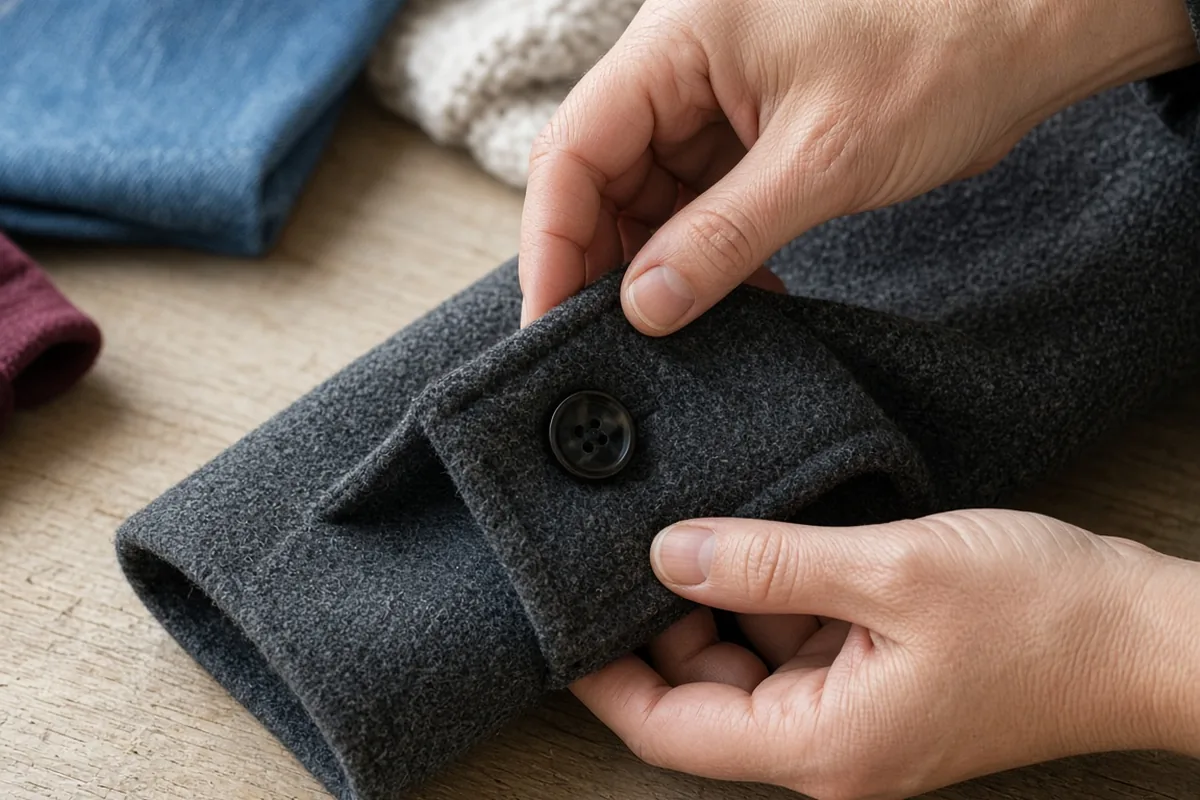
In daylight, turn cuffs, check seams, buttons, hems and underarms, and look for stains and holes. Mutual Muse says it sometimes buys a piece that has been well mended, and it declines broken, dirty or damaged items. Goodbyes ties selection to condition. A fault you can see is one to mention, not one to hide in a fold.
Then sort, and pack only the model you chose:
- Keep pieces that still work as everyday layers. Sell the ones that have left the rotation.
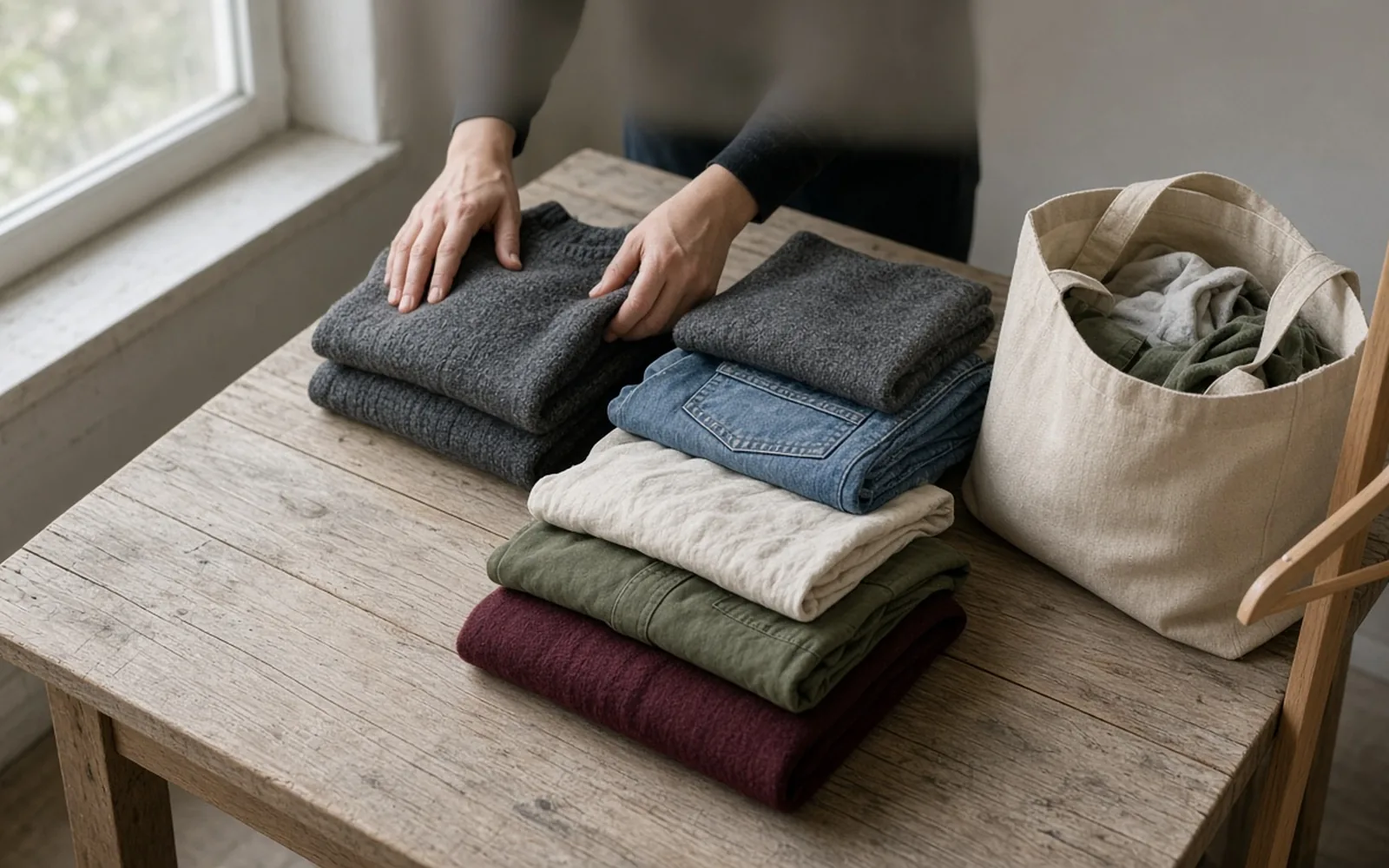
- Fold. Goodbyes wants folded pieces in sturdy bags under 10kg, up to 50 per visit, and asks you to skip boxes and large suitcases. Mutual Muse wants folds, not hangers, for an in-store visit.
- In season. Both Mutual Muse and Goodbyes name season as part of what they assess.
- ID and contact. Goodbyes: photo ID and email, and you must be 16 or over. Mutual Muse, first visit: photo ID, email and phone. Direct deposit: BSB and account number.
- Designer pieces. Bring the authentication you have. Mutual Muse declines designer goods without it. Do not assume a label is on a yes list.
- Rack only: prices, barcodes and tags done before you hang, unless you have booked a managed add-on and confirmed its fee.
Takeaway: Wash, inspect and fold before you leave, and pack to the limit of the shop you actually chose.
What happens to pieces that are rejected or do not sell?
Unselected and unsold are different events, and the postal route is different again.
At an in-store upfront visit, Mutual Muse asks you to collect on the same day you drop off. At Goodbyes, pieces that are not selected are returned the same day. Plan the trip so you can carry the “no” pile home. A coffee nearby is a poor plan if the return bag is 10kg.
On Mutual Muse’s postal route, a piece the shop cannot buy after it arrives can be donated on your behalf or posted back at your expense. That choice is not the in-store same-day return. Decide which you want before you post.
Unsold consignment pieces stay yours only until Goodbyes’ end date. Collect earlier if you want to skip a markdown. Miss the end date and the items become the shop’s property. There is no grace period in the FAQ text read for this guide.
Unsold rack pieces are still yours on the last day if you pack them down. Miss that day and a daily storage fee starts. After 5 days the terms treat the items as abandoned. Ask about donation only if you have decided you do not want the clothes back. Do not treat a sales notification in Zellr as money already in the account. The transfer waits on collection.
Set the reminder before the drop-off: same-day collection for an in-store assessment, the pricing email plus end date for consignment, and one hour before close on the final rental day for a rack.
Takeaway: Write the collection time down before you hand the bag over. After the deadline, the published terms stop treating the leftovers as yours.
Which address and terms should you use?
Shop pages change. The figures above are tied to 11 October 2026. Before you travel or post, open the operator’s own page and read acceptance, payment and what happens to unsold pieces.
A directory can send you to the wrong door. SwapUp’s article “Where to Sell Second Hand Clothes in Melbourne”, dated 25 September 2025, lists Let’s Take Two at 229 Brunswick Street, Fitzroy. The operator’s own FAQ, read on 11 October 2026, lists 165 St Georges Road, Fitzroy North. This guide does not turn that clash into a story about a move. It is a reason to trust the shop’s page over a roundup. Mutual Muse’s published doors that day were 171a Sydney Road, Brunswick, and 282 High Street, Northcote, with postal parcels directed to Brunswick.
Read these pages, then go:
- Mutual Muse, sell in store for the upfront offer, credit and direct deposit.
- Mutual Muse, sell by post if you are sending a parcel. Photos and an offer come first.
- Goodbyes, sell for consignment, the 7-week cycle and the end date.
- Let’s Take Two for the rack rental, the Fitzroy North address and the collection rule on payout.
Choose a payment model, then check that merchant’s current acceptance, payment and unsold-collection terms. This site does not book the visit, take the bag or pay you.
Takeaway: Confirm the door and the leftover rule on the shop’s own site the day you go.
When this guide does not apply
The comparison is for someone clearing wearable clothes and choosing how they get paid. It leaves out work that needs a different page or a different source.
- Donation and council textile recycling. Those are disposal routes, not payment models.
- A directory of every Melbourne buyer, op shop or market. Three operators illustrate three triggers.
- Authentication of a designer piece. Bring the documents the buyer asks for. This site does not certify labels.
- A quote for your bag. No offer here is a price for your clothes.
- Business resale, GST registration or tax treatment. The 50% line above is Goodbyes’ seller split, not tax advice.
- Hours and phone numbers. They were on the source pages and were left there on purpose.
Takeaway: Use the page to pick a payment trigger, then confirm the live terms. It will not price the bag or rank a suburb.
How this guide was put together
The shop rules come from the operators’ own pages, fetched and read on 11 October 2026: Goodbyes’ sell page, Mutual Muse’s sell, sell-by-post and support pages, and Let’s Take Two’s FAQ and terms. The Brunswick Street listing comes from SwapUp’s directory article dated 25 September 2025, read for the address clash only. The “which model fits” table is this site’s reading of those workflows.
No one from this site visited the shops, sold a bag, or recorded a payout. Acceptance, offers and proceeds for any real wardrobe stay unknown. Examples are illustrations of published terms, not endorsements. The site is an independent guide and is not the Melbourne street style blog that previously used this domain, its author, or anyone photographed there. See About. Updated 11 October 2026.
Takeaway: Payment rules are quoted from the shops’ pages on one date. Your offer is still something only that shop can make.
Related reading
- Melbourne street style for the local and vintage mix, if you are deciding what still belongs in the wardrobe.
- Streetwear outfits by temperature for the layers worth keeping before you sort a selling pile.
- What street style means if the term itself is the question, rather than a payout.
- All articles for the rest of the guides on this site.
Takeaway: Keep the pieces that still build an outfit, and use this page only for the pile you have decided to sell.