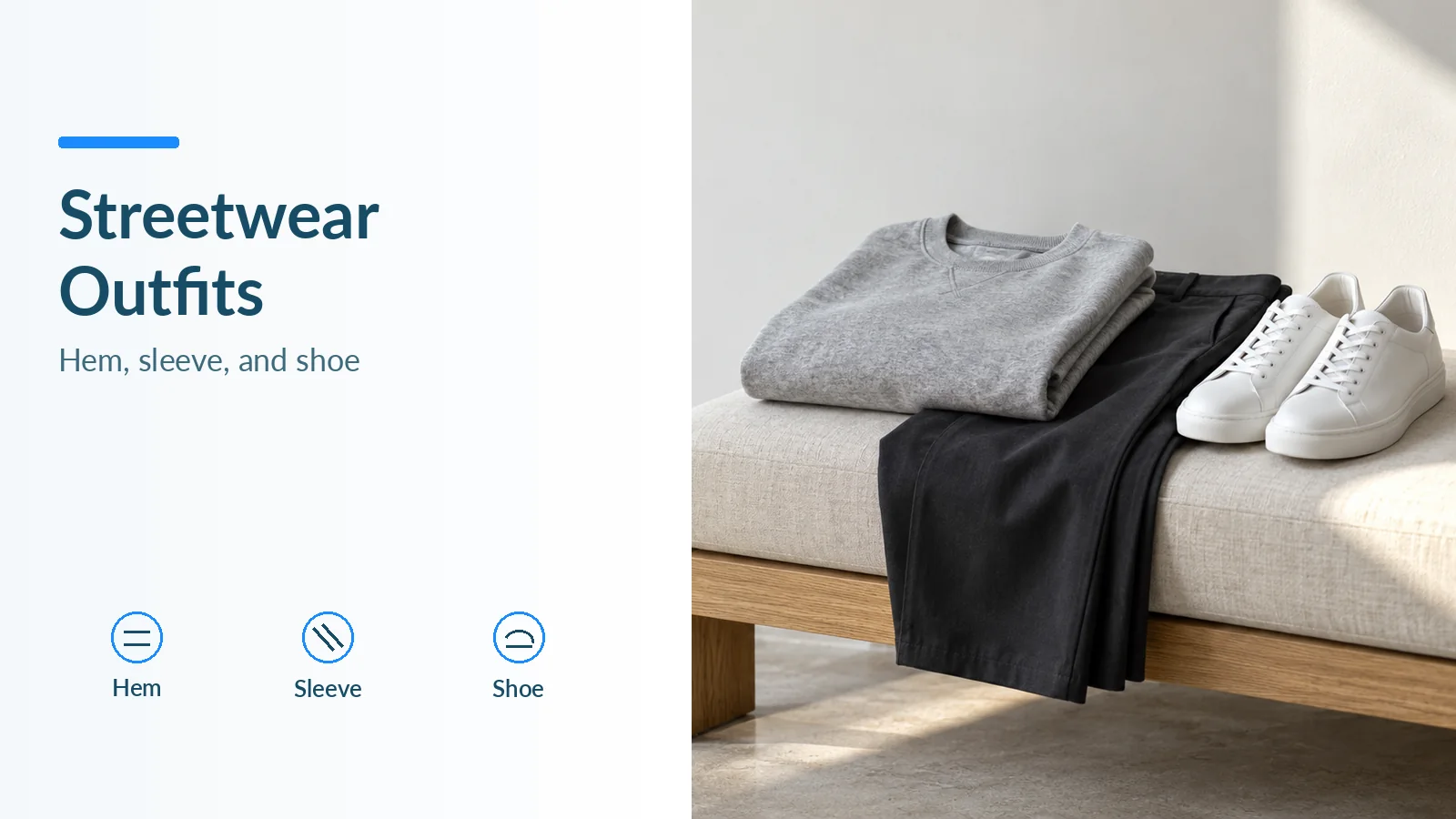
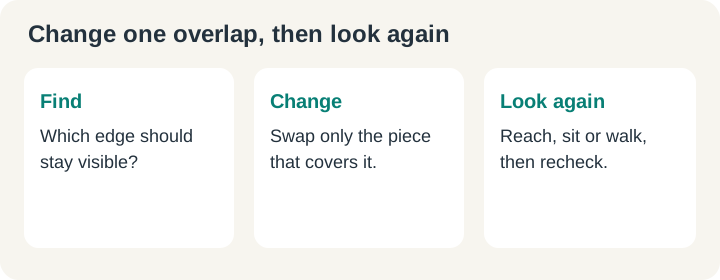
A layer that hides the piece beneath it costs you the detail you chose that piece for: a contrasting hem, a cuff or the shape of a sneaker. When building streetwear outfits for men, start by finding that overlap. Decide which edge you want visible, let the clothes settle, then change the garment that covers it.
Separate width from length
A roomy top can finish short, and a narrow top can run long. Check how much space a garment takes across the outfit separately from where its lower edge ends. Changing to a larger size to gain width may also change the hem and sleeves, so compare those edges again before keeping the swap.
The UNIQLO Boxy Cropped T-Shirt is a useful example: its description combines a boxy silhouette with short length. It shows why width and length deserve separate checks.
Try a roomy tee under an overshirt. If you like the space through the top but lose the tee’s lower edge, keep that width in mind while comparing another outer-layer length. If a long tee hides the outline you wanted from a short jacket, compare a shorter base instead. Neither problem automatically calls for narrower clothes.
Roomy tops and roomy trousers can belong in the same outfit. Decide where you want the garments to overlap and where you want their edges to remain distinct.
Hem and sleeve checks
Hem: find the edge you meant to show
With the outer layer open, look at the front and side hems. Close it if that is how you plan to wear it. Does the base layer still contribute the detail you wanted, or does it disappear behind the outer hem?
Rule of thumb: if the base hem you intend to show is fully covered by the outer hem when the clothes settle, change that overlap before adding another layer. The boundary is whether the chosen edge remains visible.
For a tee under an overshirt, compare leaving the overshirt open with swapping it for a shorter outer layer. For a short jacket over a long top, check whether the base hem extends the outline in a way you like. If it obscures the jacket’s intended shape, try a shorter base. A covered base can also be intentional; you do not need every garment visible at every edge.
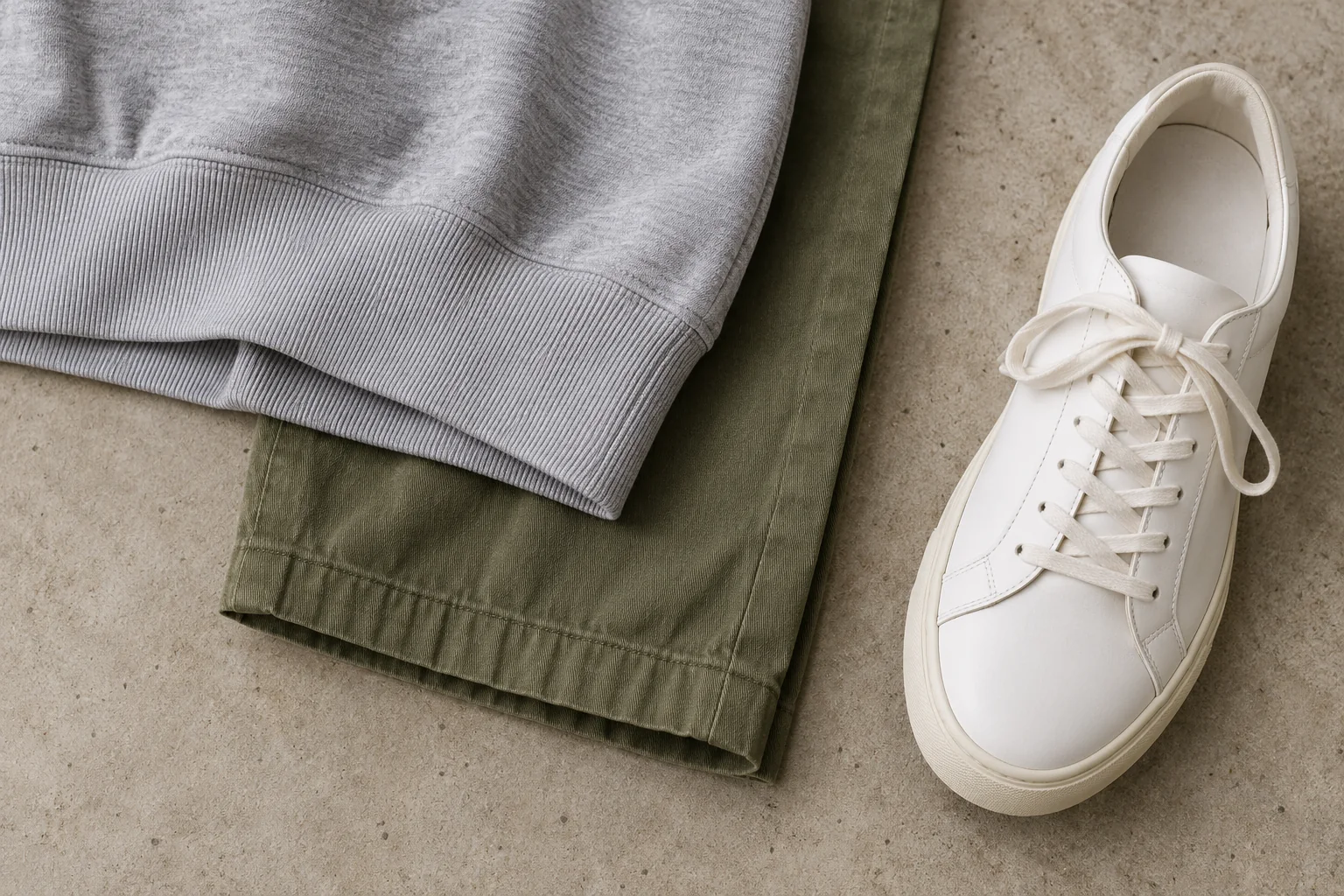
Sleeve: check at rest and after a reach
Let your arms rest, then reach forward and let the sleeves settle again. With a short-sleeve tee over a long-sleeve base, inspect whether the inner sleeve remains distinguishable below the outer sleeve. With a hoodie under a jacket, check where the cuffs meet and whether either sleeve catches inside the other.
If the cuff you wanted visible disappears, compare another sleeve length. If the problem is trapped fabric or restricted movement, try a less bulky inner sleeve or a roomier outer sleeve. A visible cuff does not resolve a sleeve that feels uncomfortable when you move.
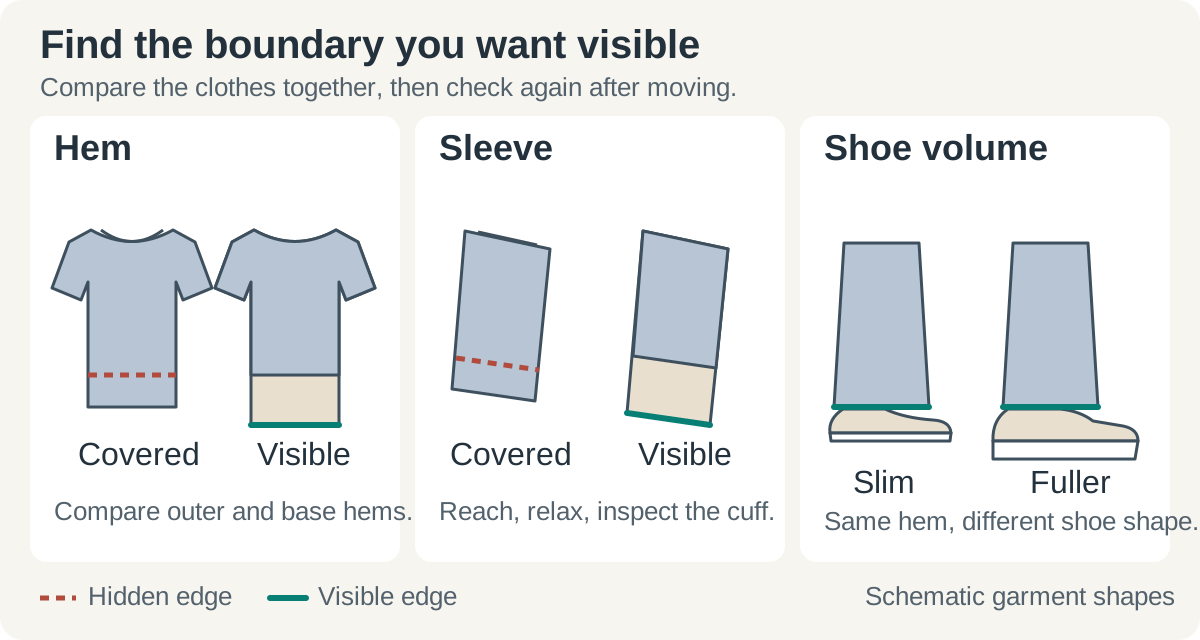
Check shoe volume against the trouser
Wear the shoes you intend to use and keep the trouser waistband at its usual position. Proper Cloth’s casual pant fit guide recommends evaluating trouser length with the intended shoes and waistband position. That makes the actual hem-to-shoe meeting point the place to inspect.
Look from the front and side, walk, then stop. Does the hem hang freely, catch on the shoe, or cover the outline you wanted to show? Keep the trousers fixed while comparing a slim shoe with a more substantial sole, if you already have both.
For the shape distinction, adidas describes low-profile sneakers through slim uppers, thin soles and a low collar; its chunky sneaker description emphasizes thick soles and oversized designs. Collar height alone does not tell you how substantial a shoe looks beneath a trouser hem.
A wide leg can work with a slim shoe. If you want that shoe visible and it disappears, compare a temporary trouser turn-up or another trouser length before deciding on an alteration. If a fuller shoe catches the opening, compare another shoe or a trouser with more room at the opening. Judge the pair after walking, as well as while standing still.
What to change first
Start at the overlap that hides the intended detail. Use the table to choose an adjustment, then repeat the movement check before changing anything else.
| Combination | Boundary to inspect | Dominant Failure Mode | Prevention |
|---|---|---|---|
| Tee under an overshirt | Base hem against outer hem | The tee edge you wanted visible is covered | Compare opening the overshirt; if wearing it closed, try another outer length |
| Long top under a short jacket | Base hem below jacket | The base obscures the short-jacket outline you wanted | Compare a shorter base while keeping the jacket |
| Long sleeve under a short sleeve | Inner sleeve below outer sleeve | The inner sleeve end disappears | Compare sleeve lengths with arms resting and after reaching |
| Hoodie under a jacket | Nested sleeves and cuffs | Fabric catches and restricts movement | Compare a less bulky inner sleeve or a roomier outer sleeve |
| Wide trousers over a slim sneaker | Trouser hem around shoe | The intended shoe outline is fully covered | Compare a temporary turn-up or another trouser length, then walk again |
| Trouser opening over a fuller shoe | Hem where it meets the upper | The hem catches instead of settling as intended | Compare another shoe or a roomier trouser opening |
Keep the pieces that already work together. If the hems read as intended, leave them alone while comparing sleeves; if the trouble starts at the shoe, begin there. Trying each adjustment separately makes its effect easier to see and can save replacing a garment that works in another pairing.
For weather selection, use the streetwear outfit temperature-band guide, then run these checks on the combination you choose. Finish by reaching, sitting and walking in it: keep the visible boundaries you wanted and the room you need to move.